Pray. Dare to Listen. Dare to Dream. Dare to Hope. Dare to Love.
Dare to Fly. To soar on wings like eagles. To run and not grow weary. To live in the strength and power of God.
Don’t you know anything? Haven’t you been listening? God doesn’t come and go. God lasts.
He’s Creator of all you can see or imagine. He doesn’t get tired out, doesn’t pause to catch his breath.
And he knows everything, inside and out. He energizes those who get tired, gives fresh strength to dropouts.
For even young people tire and drop out, young folk in their prime stumble and fall.
But those who wait upon God get fresh strength. They spread their wings and soar like eagles, They run and don’t get tired, they walk and don’t lag behind.
A personal reflection on Advent, where I find myself in Minsitry and Gabriel’s words, Do not be afraid’ – with thanks to Tim Lea’s video ‘No to Fear’.
The angel said to Mary, ‘Do not be afraid, for you have found favour with God.
Luke 1:30
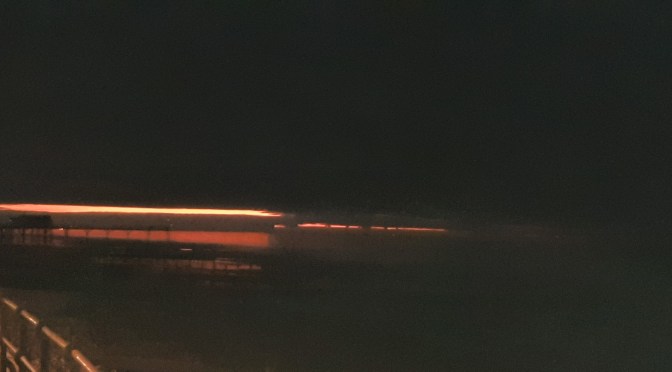
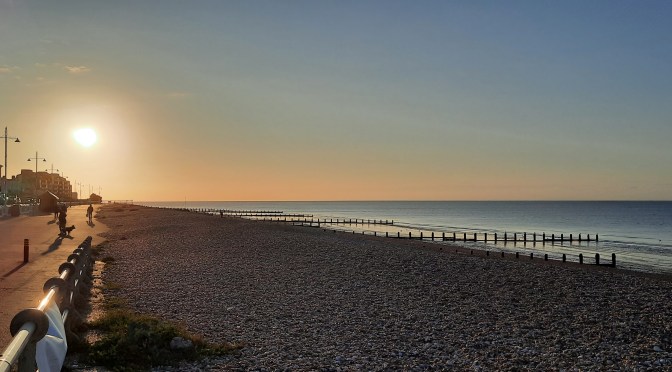
I took up running earlier in the Autumn. In was loving getting out first thing in the morning and jogging along as dawn began to break. I managed to capture some of those moments in photo’s – but often they photo’s didn’t do justice to the moments – just as the cover photo above demonstrates! it is hard to capture the dawn on a phone camera because light is sparse, and the conditions of the day still uncertain.
Then I got a cold, and the weather turned colder, wetting, darker, and I gave up – but I keep telling myself I will try again in Spring when the conditions are better.
As I joruney through advent 2021, I am finding the conditions around me really challenging. The pandemic began 18 months after I began ministry here on the Sussex Coast and now 22 months later the pandemic is still with us. I think sometimes we forget how much of an upheaval the pandemic has been, turning every aspect of our lives upside down, and challenging every assumption of what normal means.
In ministry right now there are many pressures around us and among us. There are practical uncertainties. There are quesitons about what activity to resume, and how to do it. There are questions about whether the conditions around are right to do something new, or additional, or to resume something else.
And all that comes within a culture that recognises the decline of the church in the UK and a sense of urgency that we must seek growth, numerically and spiritually.
I’m finding this period the hardest of all the periods of the pandemic so far. This seemingly endless period of of tentative, anxious, uncertain emergence from lockdown and transition to work out how to ‘live with covid’ when we don’t know how to do that well yet is exhausting, and draining let alone factoring in the advent of Omicron and all the anxieties about the future of the church.
I’ve been feeling this for a while, but only more recently begun to make sense of it enough that I can begin to articulate it – largely because last week I actually did have the quarter days I had put in my diary – rather than let other expectations and demands crowd out the space.
Then at the end of last week God has encouraged me through a Fuelcast Video that reflected on Gabriel’s words: ‘Do not be afraid’. I encourage you to watch it if you can by clicking this link
‘Do not be afraid’ – the opposite of this is to fear. I’ve realised that all the conditions of ministry I’ve mentioned above have been feeding a sense of fear within me. In the video Tim suggests fear can kill faith & stifle holy creativity because our eyes become focused on the circumstances we find ourselves in, rather than on Jesus.
That has lead me to think again about Sabbath, divine and holy rest, offering space for contemplation, basking in God’s presence & opportunity for healing and wholeness. I’ve been pondering whether my focus should be more heavily on rest, on my being, on our wellness – rather than on activity and concerns about the future.
That seems ironic given we’re in December and I have a whole host of Christmas activities to plan for!
But as the video reminds us – God’ timing is perfect and will bring things forth at the right moment – if we are making space for God – and we do that through pausing, resting, Sabbath-ing.
Advent is a season of waiting that quite often the church pays some level of lip service to in it’s drive to make the most of the opportunties for mission and outreach. And as admirable as that may be, I wonder whether our desperate rush to get to Christmas means we skip Advent’s spiritual reminder that time is God’s. That just as God’s people both patiently and impatiently waited for Emmanuel, God’s moment came.
Perhaps we need to focus more heavily on rest, on recover, on being compassionate to ourselves, each other, to the church – to allow ourselves space to turn from fear to faithfulness, and trust that God’s moment will come.
The latest in a series of video reflections on life, world and faith in up to 42 seconds. This week Dan thinks about the importance of rest in the routine of life and creation.
Last week we began exploring the ending(s) to John’s gospel with its first ending (John 20:19-31). The disciples are gathered in a locked room together, surrounded by anxiety, fear and uncertainty, and into that space Jesus appears and offers them peace and breathes Spirit upon them, to encourage them and continue to teach them more of the story, to help sustain them as they keep on believing.
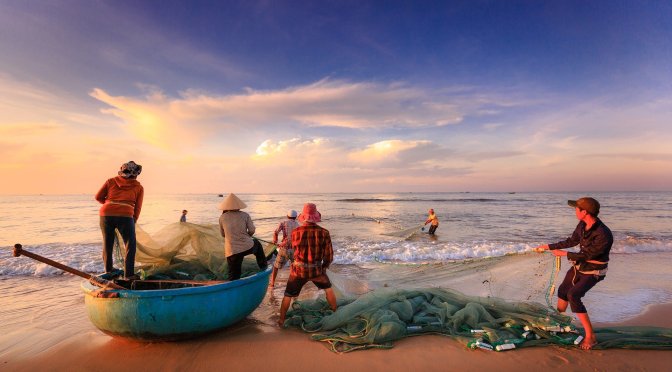
Now into chapter 21, the start of the second ending to the gospel, some of the disciples are gathered again, not in a room, but on the shore of Galilee. Peter says, ‘I’m going to fish’, and the others who are with him say they will come too.
Peter, and many of the others, were fisherman. So going to fish was familiar to them, and perhaps, after 3 years following Jesus, had become something of a past-time. Sometimes this moment can be described as the disciples going back to old ways, perhaps even turning their back on Jesus’ call to them to fish for people, and instead fishing for, well, fish.
Fishing: Life-giving fun
There can be merit for us in reflecting on that interpretation, but I’m not sure that’s the only way to hear the story. I wonder if Peter and his friends are not do much going back to old ways, but going off to spend time looking after their wellbeing. Why? Because I think we could quite equally read and hear the story as one about a group of friends going off to spend time doing something from their past that they love, enjoy and in the past found life-giving.
But yet, they have a bad night, this band of friends, and catch nothing.
As dawn comes, a voice comes from the shore – ‘children, you’ve not got anything to eat have you?’
‘No’, comes the reply.
‘cast on the right side of the boat’ says the stranger.
And so they do, and FISH! – the nets are bursting.
And Peter dives into the lake – for ‘It is the Lord’.
Once the rest of the disciples manged to drag the net of fish ashore, Jesus has a fire going, and says ‘bring your fish, let’s have breakfast together’.
and so they spend time together, in dawns morning light.
My Paraphrase, see John 21:1-14 for the full story
Fishing: A Children’s game
I love the fact Jesus, intially as a stranger to them, calls children to them. They weren’t children as we would see them, they were probably young adults by all accounts, but I love this image it leaves me with of someone standing on the shore, watching a group of friends playing around like children, having fun fishing together, despite the fact they’d not yet caught anything.
But then, with a bit of encouragement from this stranger, the disicples are blessed with nets a-bursting, and their fun and games bear fruit.
Fishing: Jesus in our everyday
I reckon this story demonstrates to us just how interested Jesus is in us, in our wellbeing, and our every day. Jesus blesses his friends with direction to get a bumper catch after a long and relaxing night as friends on the lake, doing something they love and enjoy.
Then what happens? Jesus invites them to bring what they have, and to share breakfast together. To enjoy the fruits of their leisure. There’s no teaching here, no lesson to learn, no parable told. Jesus just spends time with them, enjoying a meal together as the sun breaks on the shore.
For the disciples, their life-giving, enjoyable, fun-time-together activity was fishing, and Jesus was with them as they did so, enjoying its fruitfulness with them. What’s your ‘fishing’? What is life-giving for you? What fun is Jesus enjoying the fruitfulness of, with you?
Today is Palm Sunday, the day we remember Jesus’ Triumphant Entry into Jerusalem. You can read the story for yourself in all the gospels, including Luke 19:28-40.
This week is Palm Sunday, so named after the palm branches people picked up from the ground or cut from trees to wave and shout with triumph as Jesus’ rode on a donkey and entered the city of Jerusalem.
But this week my mind has been as much on the Christmas story as it has been on the triumphant entry of Jesus into Jerusalem.
Why? Well, last Sunday was Census day here in England and Wales. And as I filled in my census, I was reminded that according to Luke’s gospel it was a census called by Emperor Augustus that led to Mary and Joseph taking a journey from Nazareth in the north, the Bethlehem in the south to register. (Luke 2)
There is no mention of a donkey in Luke’s gospel, but it is perhaps a faux-pas that is helpful for us today – linking these two journeys – Christmas and Palm Sunday – together for us.
You see, I was thinking about how the call for a census, in some way, can be seen as the people in power using that power to play God – by seeking to know who is who. For Joseph and Mary it was the first census, the first time people had been asked to ‘register’. By registering, the ruling powers now knew who was who, and perhaps even where they were – certainly, because the people had to go to their hometown, where they had come from was now known.
Living in 21st Century we’re quite used to other people having details about us. Type “Dan Balsdon” into a Google search and it will soon tell you much about me!
But up to this point in history to be known was not something that would be seen in the same way. You might be known by your local community, a few traders in other places perhaps, family if they lived elsewhere, and for the faithful – by God. The idea of being registered in a society or country was not normative.
The opening line of Psalm 139 hold much more significance when we recognise that to be known had a very different emphasis and meaning before that first census.
“O Lord, you have searched me and known me.” (Psalm 139:1)
And so I wonder, given all of time and space, why God chose this moment, when a census was to be taken that would make the unknown known, that would change the societal and economic map, that would have an impact on the dynamics of power for the future, as the time for the Word to be made flesh and dwell amongst us. (John 1)
30 or so years on, Jesus journeys on a Donkey into the city of Jerusalem. Depending on which gospel account you read there are palms waved (though not in Luke’s account) and cloaks laid on the ground (but not in John’s account). And it is commonly titled something along the lines of Jesus’ Triumphal entry into Jerusalem.
But actually, it’s not the triumphal entry we might expect. The moment is once again a particular one, because as Jesus entered Jerusalem by the east gate, Pilate was entering by the west, in full military procession, with soldiers in armour and sword, probably horses and chariots.
Jesus’ entry is distinctive and different, almost to the point of comedy. Instead of swords there are tree branches. Instead of soldiers in clothed armour, people de-clothed and laid them down on the ground. Instead of horse and chariot, there are disorganised crowds and Jesus rides a donkey.
Jesus is playing with power by subverting expectations – saying ‘I’ll be king, I’ve be a Saviour, but not the king or Saviour anyone will expect – just you watch’.
Jesus had been challenging power in many ways for many months, and it finally comes to a head in Jerusalem, where Jesus is arrested, put on trial and crucified. But while Jesus can be said to be playing with power, he was not playing with God. Jesus was God.
For mere days later – what happens – well, spoiler alert – Jesus’ shows the true power of God – and is raised to life again. Much to the surprise of everyone!
While the sort of society we live in today is a far cry from that of Jesus day, Jesus’ call continues to us, to pick up our palms and challenge misuse of power, to challenge institutions and regimes that play God, and put our one true God who truly knows us for who we are, beautiful and wonderful beings made in God’s image, with capacity to love and do amazing things, at the centre of our very being.
So friends, what palm are you going to pick up and wave today?
In John 12, after being approached by Andrew, who has been approach by Phillip, who has been approach by Greeks wanting to come to the Passover festival (are you still with me!?), Jesus begins to talk about his coming death. Or at least, we know that he was talking about his coming death. The author of the gospel of John knew. The disciples, the Greeks, the crowd? Perhaps not so much.
In a moment which, in the text, takes us from a conversation with those around him to a conversation with his Father, Jesus says ‘Now my soul is troubled’. (John 12:27)
Though troubled is perhaps an understatement and under-interpretation of the truth of Jesus’ feeling here. A more literal interpretation of the Greek might be agitated, or more crudely, in shock, turmoil or distress.
Jesus wasn’t troubled in a trite and simplistic way. it wasn’t simply that the shopping delivery had arrived and they had swapped your beloved smokey bacon for your less favoured unsmoked.
Jesus was feeling turmoil and anguish in the depths of his soul because of what was looming on the very near horizon. He was soon to be glorified – which to the Author of the gospel, Jesus’ being glorified was the being ‘lifted up’ – the cross.
As Christians we talk of glory, often, as a good thing – ‘To God be the glory, great things he has done!’ goes the popular hymn. But Jesus was not feeling good – despite knowing what was to be gained through this moment.
Jesus has already talked about how useless a single grain is unless it falls into the earth and dies, to then come forth and bear much fruit. (John 12:24)
Jesus seems to know here, what needs to happen – but his feeling – his feeling was pain. His feeling was turmoil. His feeling was fear. His feeling was urging him to say to his Father ‘save me from this hour, this time that I know is at hand’ John 12:27.
In a moment of pain and fear, Jesus was honest with God about how he felt, despite what he knew was to come.
Friends, when was the last time you told God how you feel? How you really feel? Asked ‘where are you God?’ when you’re struggling to feel God with you, despite knowing that God is there?
Jesus’ experience shows us that it is ok to be feeling something that is contrary to what we know, or think we should be feeling. We can’t deny the truth. Can’t suppress the reality of our feeling – if we do, we start to be dishonest with God, and dishonest with ourselves.
Friends, be honest with God today, just as Jesus was, because through being honest with God about how we feel, we are honest with ourselves.
In the gospels we read the story of Jesus turning over the tables in the temple courtyard. Perhaps the closest we get in the gospels to seeing Jesus express his frustration in a physical way.
It was coming to the festival of Passover, when Jews would remember how God passed over the land of Egypt and led the Israelites out of slavery in Egypt.
It was an important festival, and Jesus heads to the temple – where he finds a menagerie of traders. And what does Jesus do? He overturns the tables; he drives the animals and traders out of the temple and declares ‘stop making my father’s house a market place’.
Why does he do this? Why does he make such a scene?
The trading that was happening in the temple courtyard had become a distraction from worship, and for some even a barrier to worship.
People were having to buy animals in the courtyard to then go to make their sacrifices, and to buy the animals they must get temple currency – like me as a Brit going to China and trying to use Pound Sterling to buy my dinner – I wouldn’t get what I needed.
The temple traders which may well have begun as a practice to enable those who didn’t have access to animals for sacrifices to be able to access them, have become part of a system of injustice.
Reflection on this gospel story might poses for us various quesitons about worship, economics, justice and injustice, anger and frustration…
But today I want us to briefly reflect on the words of Jesus: ‘Stop making my father’s house a marketplace’. Get this stuff out of the way, it is distracting us, distracting you, from God.
As Christians we have a different relationship with buildings than Jews did with the temple in Jerusalem. Church buildings are a gathering place, and can become sacred space to us, through our encountering God through worship and through lives of others. But we also know that God is no more present in these buildings than all the world. Yet buildings have a significance and value for many.
In the last 12 months as Christians, we have been faced with learning to have a different relationship with buildings that we have done before. When we have gathered in them, we have done so under restrictions which restrain us from singing and even talking with one another. For much of the time they have not been gathering places at all.
For me personally, the restrictions and particularly the responsibility of leading worship within them when I have done, has distracted, and limited me from being able to encounter God through worship and interaction with God’s community.
I encourage you to reflect today – what distracts you from worship and encountering God? What can you do to overcome those distractions?
This week I talk about God’s love for us and how Jesus came because God wants to be close to us.
Last week was exciting in our houshold because I became an Uncle for a second time – and had a wonderful video call with my second niece, who at the time was just one and a half hours old.
Even through a video call, we just wanted to reach out and have a cuddle, but of coruse we can’t. We’re in lockdown, and our niece is in Ireland, sadly it’s going to be some weeks before we are even able to begin conteplating the idea of a visit.
We heard the news of the pregancy on a video call, we saw the scan pictures by messenger, now we’ve seen her on video calls, but we’re stuck at a distance and can’t reach out our arms and hold her. We can’t feel her heartbeat, or feel hands wrap around our fingers. Yet.
One of the most familiar verses in the Bible is John 3:16:
“For God so loved the world that he gave his only Son, so that everyone who believes in him may not perish but may have eternal life.
Because of God’s love for the whole world, God was not satisfied with our feeling that he was at a distance from us – and so sent Jesus, to be close to us, and not just close to us, but to live as one of us, to experince human emotion and feeling and relationship.
Through Jesus coming to live with us on earth, God makes crystal clear that his heart is first and foremost for the world, and for us. God is interested in us. God wants us to believe in him, to experirence the fullness of life we can experience with him – now, and in eternity. God loves us, with depth and care.
The following verse in John 3 is perhaps a little less well known:
“Indeed, God did not send the Son into the world to condemn the world, but in order that the world might be saved through him.
John 3:17
There’s sometimes a belief that God sits up at a distance from us, on a throne somewhere in the clouds, pointing his finger at us – but that’s just not the truth I find in the bible, and in my relationship with God.
God sent Jesus not to bring condemnation, not to point a finger, but to save the world – because God loves the world, and God’s heart is to love us too.
If you want to know more about God’s love for you, or have questions about God, church or faith, please get in touch on any of our media channels – we can’t promise to have all the answers, but we’ll listen, and we’ll try.
An extract from the full South East District ordinand’s Testimony service held on 7th February 2021.
Here Dan shares some highlights of his experience of God in his life that have brought him to the point of ordination as a presbyter in the Methodist Church.
I had to go out for a walk in the rain with the girls this week, and so our youngest was desperate to go out in her wellies – which she did. She walked through each puddle and watched the water rise up around her toes. As she jumped and splashed her smile was oen of those smiles that beam with joy from cheek to cheek.
Seeing her joy at what before that moment had been to me a mundane and slightly frustrating task – having to go out in the rain – brought me up short. She found joy were I had seen only wet, grey and mundane. But in that moment, through her joyful splashing in puddles, I had been splashed with joy too.
What we do, and how we live impacts others. It’s the way God made us, it is our human nature to be relational, connected beings.
But God has also made each of us unique, and it is through that uniqueness that I believe God has place in each of us a uniqueness and blessing that only we can bring to the world.
6 We have different gifts, according to the grace given to each of us. If your gift is prophesying, then prophesy in accordance with yourfaith; 7 if it is serving, then serve; if it is teaching, then teach; 8 if it is to encourage, then give encouragement; if it is giving, then give generously; if it is to lead, do it diligently; if it is to show mercy, do it cheerfully.
Romans 12:6-8, NIVUK
So whoever you are, whatever your gifts and passions and skills, use them, and splash with them – because through you, God will bless others too.