All posts by danbalsdon

Christian. Methodist Minister (Presbyter) serving in the Bognor Regis area, South East, UK. Husband, Father of 2. Book hoarder. Wanna-be chef. Heart for living in community and for seeing the presence and activity of God in day to day life.

‘This love we got is the best of all’ – Merry Christmas

I always look forward to hearing new Christmas tunes and carols, and watching the music video’s that come with them. This year I’ve been struck by Ed and Elton’s ‘Merry Christmas’.

Every time I watch this, I see reference to another past Christmas hit. Slade, Wham, Snowman, even a Sausage Roll!

If feels like they’ve looked back at all the classic Christmas tunes that people have most loved and tried to combine all the ‘feel-good’ buts into one video.

It has a wonderful, Christmassy feel about it, but the song is also very real. It starts with the truth that Christmas 2021 is also a Christmas of lament, remembering all that we have gone though these last 2 years…

I know there’s been pain this year but it’s time to let it go
Next year you never know, but for now
Merry Christmas

As we remember the Christmas story, the declaration of angels saying God’s promised one has come, and will transform the world…Mary, Joseph, shepherds responding to God’s message… there was much they didn’t know. But for now, in the moment, they look in awe and wonder at the Christ-child, who is love that is the best love of all.

We’ll dance in the kitchen while embers glow
We’ve both known love, but this love that we got is the best of all
I wish you could see you through my eyes then you would know
My god you look beautiful right now
Merry Christmas

This Christmas I want you to see the Christmas story, not through Elton’s eyes – but through God’s eyes. God who wants us to see and know that in Christ we find the ultimate expression of God’s love.
Love that has no terms and conditions attached,
love that shows no judgement,
Love simply because God can do nothing but love us.

Just as we may well spend some of Christmas visiting or spending time with people we love, so too did God step down from heaven and become human, to spend time with us.
To live as we live, because God loves us.

So as Christmas comes around once again,
here comes the annual reminder of God’s love come down to earth,
and to us.

I feel it when it comes
Every year helping us carry on
Filled up with so much love
All our family and friends are together where we all belong
Merry Christmas everyone

We’ve had a tough 2 years, and while the landscape is changing it is still going to be tough for while longer… but the love of God we discover in Jesus helps us carry on through the highs and lows of life.

And that gift of love is not only for us to keep and cherish for ourselves, it is also one we are encouraged to share.

There are many ways of encouraging, of giving, of sharing, of caring for and loving the people around us. In our words, our actions, our giving and offering hospitality.

Christmas is a time to give and share and encourage,
Christmas a time to love,
because it is through the best love of all we discover in Jesus
that the world, and we all, can find true hope.

this love that we got is the best of all
I know there’s been pain this year but it’s time to let it go
Filled up with so much love
Merry Christmas everyone

Keep Watching….

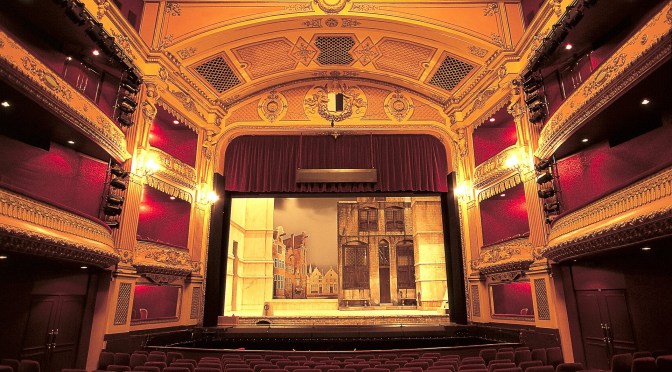
The stage was set…
The house lights dimmed…
Silence…
Waiting…
Watching…
Anticipation building.

Then with great gusto, The orchestra begin to play,
The curtain begins to rise…
The stage is revealed, and the show begins. 

I still remember my first trip to the West End.
Anticipation was strong.
We knew the story we were about to witness,
Yet we didn’t know quite how they would do it on the stage.

So as we sat there,
We sat between the known and unknown,
intensifying the anticipation of what was coming…
The knowing made the waiting even more electrifying.
The unknowing made the waiting more exciting.

That image, for me, captures the essence of Advent,
A time of waiting in expectation,
Between the known and the unknown,
Remembering what was.
Waiting and watching for what will be.

Waiting inhabits most areas of our lives, in one way or another.
Sometimes waiting passes by unnoticed.
At others, waiting is a heavy millstone around our necks.

Sometimes waiting can be a joyous and uplifting time,
At others, it can be draining of all life.

And over the last 2 years waiting has taken a whole new meaning for us… waiting for our turn in the vaccine roll out, waiting for another news conference, waiting to know if there will or will not be more changes to the way we live our lives….

In Luke 1:39-45 we read of Mary and Elizabeth.
Both are pregnant…
Unexpectedly pregnant in fact…
Both families have been visited by angels foretelling something of what will happen.

When Elizabeth heard Mary’s greeting, the child leapt in her womb. And Elizabeth was filled with the Holy Spirit and exclaimed with a loud cry, ‘Blessed are you among women, and blessed is the fruit of your womb. 

Luke 1:41-42

Amidst all the unknowns…
Amidst the crazy uncertainty…,.
Elizabeth somehow knows Mary carry’s God’s promised one…
She doesn’t know how, what, why…
But she knows that this baby would be a fulfilment of God’s promise.

How it must have felt for Mary and Elizabeth,
Having a glimpse of what might be coming,
A glimpse of what God was doing,
Yet not really knowing God’s plan at all.

Confusion. Uncertainty. Fear. Disbelief. Loneliness.
Why them?
Why now?
How?
When?
What?

There must have been more q’s than answers.
But they were willing.
They trusted.
Waited.

2000 or so years on, we’re in a different place…
The promised Messiah came
Jesus came, lived, ministered, died, rose again.
Left the Spirit of God with us.

All could be made well with the world…
Peace, hope, harmony, justice, righteousness, clarity….

2000 years on, perhaps the world isn’t quite so different as we sometimes like to think. Humankind might have progressed, but thw world is still a mess.

While I don’t think any of you are expecting to give birth to a son of God any time soon…we are all also like Mary & Elizabeth.

We’re human.
Still human.
Still live with anxiety, fear.
We live with questions.
We live with uncertainty.

For me, there’s something about the known and unknown of the season of advent, the watching and waiting which reminds me that God is as much in the waiting, uncertainty and the unknown, as everything else.

As Advent reminds us of what was, is and will be,
We are reminded we worship a God who’s work has not finished.
Has never finished.
Advent reminds us to keep watching…
Watching for glimpses of the God in our daily lives.
Watching for the activity of God in the world.
Watching for God’s invitation to us to participate in that activity.

For that is God’s gracious and generous offer to us.
Inviting we watchers and waiters to participate in the continuing work of God.
So, keep watching.
In advent and in all our days…


“Do not be afraid”

A personal reflection on Advent, where I find myself in Minsitry and Gabriel’s words, Do not be afraid’ – with thanks to Tim Lea’s video ‘No to Fear’.


The angel said to Mary, ‘Do not be afraid, for you have found favour with God. 

Luke 1:30

I took up running earlier in the Autumn. In was loving getting out first thing in the morning and jogging along as dawn began to break. I managed to capture some of those moments in photo’s – but often they photo’s didn’t do justice to the moments – just as the cover photo above demonstrates! it is hard to capture the dawn on a phone camera because light is sparse, and the conditions of the day still uncertain.

Then I got a cold, and the weather turned colder, wetting, darker, and I gave up – but I keep telling myself I will try again in Spring when the conditions are better.

As I joruney through advent 2021, I am finding the conditions around me really challenging. The pandemic began 18 months after I began ministry here on the Sussex Coast and now 22 months later the pandemic is still with us. I think sometimes we forget how much of an upheaval the pandemic has been, turning every aspect of our lives upside down, and challenging every assumption of what normal means.

In ministry right now there are many pressures around us and among us. There are practical uncertainties. There are quesitons about what activity to resume, and how to do it. There are questions about whether the conditions around are right to do something new, or additional, or to resume something else.

And all that comes within a culture that recognises the decline of the church in the UK and a sense of urgency that we must seek growth, numerically and spiritually.  

I’m finding this period the hardest of all the periods of the pandemic so far. This seemingly endless period of of tentative, anxious, uncertain emergence from lockdown and transition to work out how to ‘live with covid’ when we don’t know how to do that well yet is exhausting, and draining let alone factoring in the advent of Omicron and all the anxieties about the future of the church.

I’ve been feeling this for a while, but only more recently begun to make sense of it enough that I can begin to articulate it – largely because last week I actually did have the quarter days I had put in my diary – rather than let other expectations and demands crowd out the space.

Then at the end of last week God has encouraged me through a Fuelcast Video that reflected on Gabriel’s words: ‘Do not be afraid’. I encourage you to watch it if you can by clicking this link

‘Do not be afraid’ – the opposite of this is to fear. I’ve realised that all the conditions of ministry I’ve mentioned above have been feeding a sense of fear within me. In the video Tim suggests fear can kill faith & stifle holy creativity because our eyes become focused on the circumstances we find ourselves in, rather than on Jesus. 

That has lead me to think again about Sabbath, divine and holy rest, offering space for contemplation, basking in God’s presence & opportunity for healing and wholeness. I’ve been pondering whether my focus should be more heavily on rest, on my being, on our wellness – rather than on activity and concerns about the future. 

That seems ironic given we’re in December and I have a whole host of Christmas activities to plan for! 

But as the video reminds us – God’ timing is perfect and will bring things forth at the right moment – if we are making space for God – and we do that through pausing, resting, Sabbath-ing.

Advent is a season of waiting that quite often the church pays some level of lip service to in it’s drive to make the most of the opportunties for mission and outreach. And as admirable as that may be, I wonder whether our desperate rush to get to Christmas means we skip Advent’s spiritual reminder that time is God’s. That just as God’s people both patiently and impatiently waited for Emmanuel, God’s moment came.

Perhaps we need to focus more heavily on rest, on recover, on being compassionate to ourselves, each other, to the church – to allow ourselves space to turn from fear to faithfulness, and trust that God’s moment will come.

Recommended Read: Unapologetic

Unapologetic: Why, despite everything, Christianity can still make surprising emotional sense.
Written by Francis Spufford.

Published by Faber & Faber, 2012

I have loved reading this fresh and bold story and exposition of why belief in God matters and makes a difference. Loved it, but struggled to work out how to share it with you – because it is not a book that is easily reviewed – it simply needs to be read and experienced for yourselves.

I’ll be honest – it is a challenging read – not that the words are hard to read – in fact quite the opposite, you may well struggle to put it down. But it is challenging because every page has at least one line, idea, or phrase that will make you stop and need to think about – possibly even want to disagree with – and then find your mind blown and read on to the next bit that makes you stop and think.

Spufford offers a unique presentation on how to make sense of God, faith, Jesus, bible and church for today – challenging any reader to look in a mirror, recognise our brokenness and need for mending and to find that mending in the grace of Jesus.

Unapologetic will make you think deeply and differently about life and relationships and faith. It asks questions about the existence of God, how we understand sin, why there is suffering in the world and how on earth Jesus dying is what brought redemption to the world. And to those questions there are few definitive answers offered, but there is a whole lot of Jesus , and a whole lot of hope offered in the questions, the mystery and the uncertainty that emerges. Oh, and a whole lot of unconditional, unwavering grace.

Church, Spufford argues, is a space of failed people seeking to perpetuate the unlimited generosity of God. it is a messy place, where the institution messes up (actually, Spuffords language is more colourful than that!), but Christ is still looking at and God is still shining.

Spufford concludes (and this gives you a flavoyr of all the book explores):

“If that is, there is a God. There may well not be, don’t know whether here is. And neither do you, and neither does Richard bloody Dawkins, and neither does anyone. What I do know is that, when I am lucky, when I have managed to pay attention, when for once I have hushed my noise for a little while, it can feel as if there is one. And so it makes emotional sense to proceed as if He’s there; to dare the conditional. And not timid death-fearing emotional sense, or cowering craven master-seeking sense, or censorious holier-than-thou sense, either. Hopeful sense. Realistic sense. Battered-about-but-still-trying sense. The sense recommended by our awkward sky fairy, who says: don’t be careful. Don’t be surprised by any human cruelty. But don’t be afraid. Far more can be mended that you know.”

Freedom – taking personal Responsibility

With ‘freedom day’ upon us, I’ve been thinking a bit about the word freedom and what we may mean by it. I typed ‘freedom’ into an open source image site and found it quite ironic that freedom was depicted almost entirely in terms of isolated individuals in nature – not a crowded bar or theatre in sight! (a sample of the images offered to me above!) 

Words like freedom are a bit like onions with layers of meaning…  but perhaps also like a kinder egg… because if we unpack what it may mean for us we may be surprised at the diversity of meaning among us. 

Freedom is a deeply theological concept for us as Christians, strongly driven by scriptures story. Much of the bible comes from people and communities seeking freedom, but restricted from it by the geo-political and social structures of the day. Ruth and Naomi restricted by famine and grief yet subverting the cultural restrictions of the day. The Israelites enslaved in Egypt , longing for the promised land. Paul, Peter and many others imprisoned writing to inspire the early church… 

Some parts of the Old Testament are packed with rules for the community of God; don’t eat unclean animals, no mixed fibre clothes, rules for bathing… there is even an instruction not to boil a baby goat in its mothers milk. There’s all sorts of ways to explain why these rules may have been necessary at the time, some very practical – for example some rules may have helped stop the spread of disease.

By the time Jesus came, these rules had become so restrictive to the people of God they had become a mill stone around the people’s neck, and the religiosity of the system had taken away any sense of freedom. So Jesus comes and turns everything upside down, freeing God’s people and all the world from restriction – God did not send the son into the world to condemn it, but that it might be saved (John 3:17) , and offering freedom ‘if the Son makes you free, you are free indeed’ (John 8:36).

But what do we do with that freedom? Do we go off and do whatsoever we like? That is the choice we have. That is the personal responsibility we bear. But how do we bear it? What does Christian personal responsibility look like? 

These quesitons are not new questions – it seems that the early church asked them too, and while maybe not in the context of a pandemic, Paul writes to the Galatians that as God’s people we are called into freedom. Not merely earthly freedom (e.g. from mask wearing and social distancing), but to the Spiritual freedom of belonging not to the kingdoms of earth but the kingdom of God. To be called into freedom is to embrace the liberating, redeeming power of salvation we find through belonging to God’s kingdom. 

But, says Paul, we are also called to choose use our freedom responsibly – to take personal responsibility and not keep our freedom for self-indulgence, but to live out God’s law that Paul and Jesus both sum up in one phrase ‘love your neighbour as yourself.’ 

For you were called to freedom, brothers and sisters; only do not use your freedom as an opportunity for self-indulgence, but through love become slaves to one another. For the whole law is summed up in a single commandment, ‘You shall love your neighbour as yourself.’ If, however, you bite and devour one another, take care that you are not consumed by one another.

Galatians 5:14-16

In light of the emphasis on ‘personal responsibility’ for mitigating covid risk, moving away from laws that dierct us, I’m minded that personal responsibility is not about only thinking about self, but also taking personal resposibility for ensuring our personal actions also love our neighbours. 

As we enter this new phase of pandemic, I encourage you to reflect on 2 things:
1, reflect spiritually and on your relationship with God: what does Christian freedom mean for you?    
2. reflect practically, how do you demonstrate to the world the personal responsibility we are called to exercise?  

Weekly Reflections from Rev Dan, also published in Tues News 20/7/21.
Sign up for the weekly Tues News here.

Standing against racism

There is no longer Jew or Greek, there is no longer slave or free, there is no longer male and female; for all of you are one in Christ Jesus.
Galatians 3:28 (NRSVA)

Weekly Reflections from Rev Dan, also published in Tues News 13/7/21.
Sign up for the weekly Tues News here.

Friends, 

“At the heart of the Methodist community is a deep sense of the place of welcome, hospitality and openness which demonstrates the nature of God’s grace and love for all.

Our church communities are called to be places where the transformational love of God is embodied and life in all its fullness is a gift which is offered to all people.

There are no distinctions based on race, gender, disability, age, wealth or sexuality, or any discrimination associated with this gift.”

Extract from the Strategy for Justice, Dignity and Solidarity, Methodist Conference 2021, p782. 

After some weeks of incredible football and an intense match last Sunday evening, where England played their hearts out against the team that were always tipped to win, to end up at a penalty shootout and come second in the tournament seemed to me to a pretty good result. Not only that, but even more importantly, the way the whole team have sought to live with integrity, solidarity and ownership of their decisions is an example we need to see more of. 

So it has been devastating to witness yet again the systemic racism that is present, and seemingly becoming more prevalent in society. To ‘blame’ England’s loss on a trio of gifted footballs because they are black is abhorrent and should have no place in our society, I hope you would agree. 

But how will we respond? How do you stand against racism in your living and daily activity in your community?

This morning I feel convicted to recognise that to do nothing, to ignore or let it pass by in the hope things will change, or that someone else might do something about it, is the collude with the racists themselves. To do nothing is to deny the truth that all people are made in the image of God. 

Rooted in Christ, we can have confidence that despite worldly opinions, the invitation to God’s table is for all. So let us stand up, speak up and live with confidence in justice, dignity and solidary for all God’s people. 

In peace and hope,Rev Dan 

Mysterious Spirit

PDF Download

Full text

Today, 23rd May, is Pentecost Sunday. A day Christians will often remember the story we read in Acts 2 when the Holy Spirit is outpoured upon the disicples of Jesus like tongues of fire and 3000+ people joined the community of the saved, the followers of the way.

This painting is called Pentecost, dating from 1962 and was painted by Dennis Hawkins. It one of the many paintings we find among the Methodist Modern Art Collection. This Painting from Hawkins comes from a larger series of paintings, here’s some explanation about the painting and story behind it…

Pentecost, Dennis Hawkins, (c) TMCP

The descent of the Holy Spirit, on the Jewish feast of Pentecost, marked the birth of the Church, and is represented by an intense circle of white light, painted on the top of an old school desk. In this way Hawkins represents the success of the Church penetrating unlikely nooks and crannies and dark corners throughout the world and illuminating them with the light of the Holy Ghost. In the 1960s Hawkins produced dozens of “Pentecosts”. The traditional iconography of Pentecost was tongues of fire, but instead he chose to use the circle or sphere. He saw it as a numinous object, mysterious without beginning or end and all-embracing, an ideal symbol for the coming of the Holy Spirit.

Commentary based on ‘A Guide to the Methodist Art Collection’. from Pentecost – Dennis Hawkins (methodist.org.uk)

I love way Hawkins demonstrates the coming of God’s Spirit in this endless and timeless way, echoing the truth that while we have the Acts 2 Pentecost, God’s Spirit is at the beginning in Genesis, and through many different images and metaphors threads its way throughout scripture, throughout time, And throughout our very lives.

I also love the way this sphere of light appears as graffiti on ‘normal’ objects to the 1960s world. From being an ordinary day to day object, this old school desk is now marked and becomes something unique and special, carrying a hallmark of the life-giving, all-embracing spirit of God.

This image, this art, this metaphor, reminds us that today, Pentecost, is not merely a day where we may read Acts 2 and be reminded of the story we sometimes call the birth of the early church. Today is a day where we remember and celebrate the timeless, endless, all-embracing and life-giving presence of God – which we know as God’s Spirit, that rests on and within each of us – ordinary people, who become marked, special and unique, carrying the hallmark of the all-embracing presence and power of God everywhere we go.

Jesus prays for us

Read: John 17:6-19

Downloadable PDF

‘Fool of God (Christ in the Garden)’
Mark Cazalet (1964- )
Methodist Modern Art Collection 
Image Copyright © Trustees for Methodist Church Purposes. The Methodist Church Registered Charity no. 1132208

Full text

Read: John 17:6-19

As a parent of two young girls, I have a duty of care to them. Before they were born my wife and I would fairly often both be out of the house in an evening; we were both in a choir, my wife did some amateur dramatics, I would sometime have church meetings, most months we would head out for a meal or to the cinema, or have an evening out with friends.

But having children means we can no longer choose to head off on our own paths without considering others, because we now have a duty and responsibility to care for these small people we have the privilege to call ours.

The combination of moving away from friends in Cornwall, my becoming a minister, as well as the more recent pandemic means that;

A) only one of us can be out in an evening unless we make arrangements for someone else to look after them for us, and

B) that most evenings now involve Louise and I binge-watching the latest series we’ve take a fancy to on Netflix.

Our commitment to, and love for, our children leads us to ensure at least one us is present to care for them.

Here in these words from John 17, we find part of a long and winding prayer the gospels records Jesus prays to his father for his friends. For his band of disicples, and for all those who call Jesus friend. Because Jesus knows he is about to be taken from them. These people, his friends, who he loves and has been committed to are soon going to be without him.

Jesus is painfully and heart wrenchingly praying to the father for his friends who he will soon depart from. That they will be entrusted to God’s care, that they will belong to God and God will protect them as they seek to live out Christ’s example to them in the world.

I firmly believe in this moment of heart-outpouring prayer of Jesus 2000 years ago, Jesus prayed a prayer that was prayed beyond the confines of time and history – that in that moment Jesus prayed for each of us too.

That each of us who call Jesus friend was held in his mind, his heart, his voice, his prayer. Jesus prays for us, for me, for you.

Jesus prays that just as he belongs to the father, just as he has a close relationship with father – so too might his friends have such a relationship.

So too might his friends belong to God, and all that is light and truth and freedom, while living and serving in the world. 

Jesus makes a distinction between those who belong to the world, who seek and serve the earthly kingdom of materiality, individualism, greed and selfishness, and those who belong to God, people who seek God’s kingdom. Those who recognise, affirm and respond to the stirrings of God’s Spirit abiding within them.

Jesus’ prayer for his friends and for us, and asks that we may be in the world, in the thick of human life and activity, yet belonging not to the world, but to God. That we may be distinctive in the world – ‘sanctify them in truth’ he prays – which means make them holy. (17:17)

What does it mean to be Holy?

We’ll, let’s be honest, perhaps it will take a lifetime of living as friends of Jesus, and experiencing for ourselves what it means to belong to God to know what it means to be holy.

But I suggest to you, that to be holy, as a disticntive of God’s people, is about a heart for seeking God and God’s kingdom. Responding to God’s reaching for us, by reaching for God, and allowing God to inhabiting within ourselves, and bear the fruit of the very goodness and graciousness of God as we live and walk in the world.

And that goodness, that fruitfulness, that abiding connectedness between us and God is what Jesus prays over us.