Category Archives: All Posts

Finding Piece

A few weeks ago I published known in the unknown, a blog post where I reflected on how I was feeling as I journey through the uncertainty and unknowns surrounding my Reception into Full Connexion and Ordination within the Methodist Church which was due to take place at the end of June.

Emerging from Turmoil

It is fair to say I was feeling in turmoil when I wrote known in the unknown, but I can say that the process of becoming vulnerable and sharing that turmoil was helpful for me in beginning to find healing and new direction.

It also led to receiving an outpouring of messages of care, prayer and encouragement which have all been greatly appreciated and affirming over these last few weeks. I Through them I have also felt the love and affirmation of God. It has been a helpful reminder that God has called me to this vocation, and despite the changes, delays and uncertainties, God’s call remains steadfast.  

While much that would have happened is on hold, and many uncertainties about the implications of that remain, I will be Received into Full Connexion with the Methodist Church on Saturday 27th June, 6pm. All can watch through the Conference website. My ordination will come, but the date and arrangements are yet to be determined.

I still have some disappointment that things will not be as they were expected to be, and a struggle with the uncertain of waiting that this brings. Yet through prayer and reflection I’m coming to a point where I can find ways to make sense of and journey with this struggle in a positive way.

What follows is no theological treatise or doctrinal exposition, but some personal reflections, thoughts and feelings which take me right back to the early days of my candidating for presbyteral ministry and through which I have recently felt God speaking to me and encouraging me to keep journeying through the unknown.

Remembering: My Connexional Jigsaw

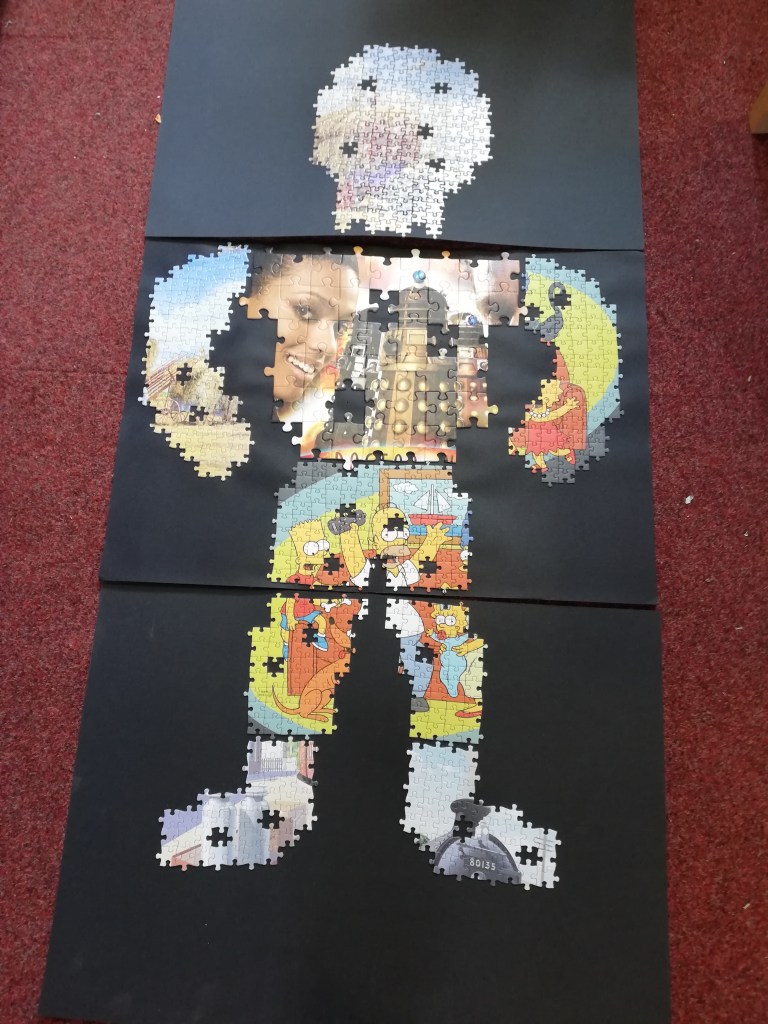
As part of the process of offering myself as a candidate for ministry I had to deliver a creative presentation entitled ‘picturing the Methodist Connexion in the 21st Century’. My task was to creatively reflect on and respond to a recently published paper which explored questions of what it means to be a Methodist Connexion in the 21st Century. As part of my creative presentation I created this illustration of a body out of multiple jigsaws.

Connexional Jigsaw, created January 2016

The body is not an unusual metaphor for explaining Christian community. Different parts of one whole, various functions by different parts that enable the body to work and move and grow.

There is one body and one Spirit, just as you were called to one hope when you were called; one Lord, one faith, one baptism;

11 So Christ himself gave the apostles, the prophets, the evangelists, the pastors and teachers, 12 to equip his people for works of service, so that the body of Christ may be built up 13 until we all reach unity in the faith and in the knowledge of the Son of God and become mature, attaining to the whole measure of the fullness of Christ.

Ephesians 4:4-5, 11-13

Looking back at the notes I made at the time, for me the Methodist connexion was an expression of inter-connectedness; mutual-belonging; a joining together of the whole people of God despite contradictory convictions; an expression of what it meant to be church.

In my connexional jigsaw, I intentionally used no edge pieces – my attempt to illustrate a body that is in-complete, reaching out for new connections and possibilities, a shape is not permanently defined.

I also left pieces missing, and mismatched puzzles that do not fully connect. I wanted to demonstrate the body as imperfect and broken, yet open. The Methodist Connexion, as with any Christian community, lives in a world of brokenness. Despite our deepest desires and greatest intentions, people have been hurt, abused, and rejected by people acting in the name of Methodism. People do not always feel they belong.

Yet I wanted to illustrate a hope that the body that is the Methodist connexion can be a church where there is an awareness of our broken fallibility and our missing pieces. I wanted to hold out hope that we can be an open space where those who feel they don’t belong could belong.

This exploration of connexionalism early in my formational journey has been foundational to my continued journey through the following years.

Journeying: Learning to be a puzzle piece

Honestly, candidating, moving to Birmingham and starting formational training at Queens petrified me. I was full of anxiety, worried what others would think of me or if I would fit in. Much of that is rooted in my struggles with my own identity, belonging and purpose in my teen and young adult life, but that’s for another time!

Cut a long story short, despite our different journeys, opinions, backgrounds, denominations, personal circumstances (and everything else!), it is with this beautifully quirky, diverse and God-loving group of people I can call my cohort, friends and ‘Queens family’ that I came to learn I am a piece that belonged in the jigsaw, called to be who God made me to be.

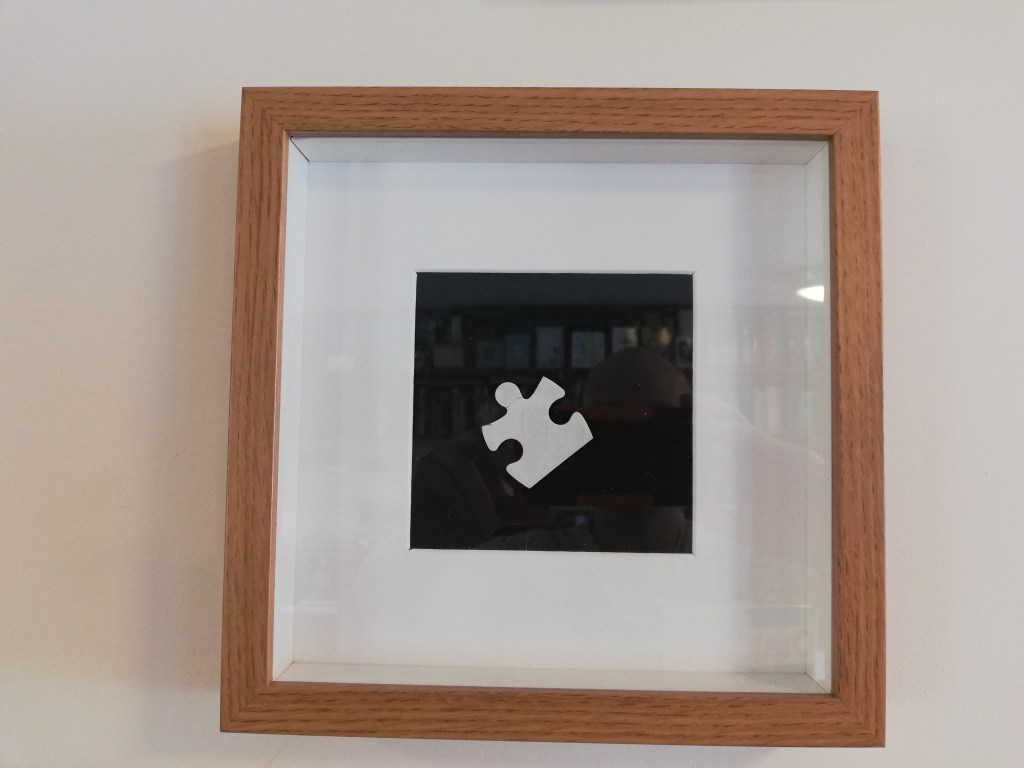
On our last day at college Methodist leaves spent a day reflecting together and were asked to bring an ‘object’ with us to use as part of our reflections. For me it was this puzzle piece. It had appeared in the girls bedroom from we-don’t-know-where a few days before, and I just had this sense of needing to take it.  

Among the things I jotted in my journal that day, I noted how jigsaws require all the pieces, that each individual piece matters and without each individual piece in place, the puzzle is incomplete. By the nature of their design, the picture of a puzzle lacks detail when a piece is not in place.  

A Piece with a Purpose

It hadn’t been in my mind when I chose it as my object, but as I reflected I remembered my creative presentation and looking around the room came to realise how this group of people were each pieces in the vast connexional jigsaw. This moment was perhaps the first time I felt I experienced a glimpse of what it would one day mean to be Received into Full Connexion, coming to belong to an order of ministry made of up diversely gifted and opinionated (!), God-centred people, called and equipped by God in a particular way to serve God’s people.

That day a little piece of card that I could easily how thrown away, was given new purpose. It now hangs on my wall to remind me of my formational journey, my Queens family, my being a unique part of a bigger whole, my belonging to God’s church, and growing into my vocation as a minister within God’s universal church.  

A Piece Connected to Others

Reminded of both my own personal call, and the way I am connected to others has helped me to hold my personal disappointment in perspective with the wider world.

My disappointment is not isolated and unique. From the postponed weddings; funerals held differently to ‘normal’; birthday parties held on zoom; inability to purchase eggs, flour or loo roll (!); trivial or deeply difficult – all of society is bearing disappointments, uncertainties and changes to our way of life.

Held in perspective, I’m coming to see my disappointment as part of my being connected to others, my bearing the worldwide impact of coronavirus, my sharing in the communal suffering of our groaning world.  My participation in the necessary change and the emergence into the ‘new normal’ we all have to begin to adjust to.

I’m also coming to see this experience as part of the burden of responsibility that goes with saying yes to serving God. I realise now that I too am represented by the missing pieces and mispatched jigsaws through which I sought to illustrated the broken body of Christ living in a broken world. And I too can still belong.

Opportunity Discovered

And through that disappointment, I’m finding opportunity. Much of my disappointment comes from the fact that the things in which I had held symbolism and meaning are having to change. But, if I choose to, I can find new-meaning in new places despite the delay and uncertain waiting.

While the unknown is difficult, subverts tradition (which granted can be good or bad!) and is in some ways un-nerving, I’m also coming to feel excited again by the prospect of discovering God through the unexpected in what is yet to come.

This opportunity to discover and rediscover for myself is now starting to feel like an unexpected gift. A time to be brave, not clinging to the past but reaching for the future, as part of the body that is ready to change and transform for such a time as this.

A gift, a piece, and peace  

Despite COVID being a catalyst for things to be different, change does not have to detract from truth. I’ve been reminded these last weeks that no matter what happens in this broken and uncertain world, I am still called & equipped by God. I am still a unique piece of the puzzle that is God’s kingdom, and God’s kingdom would have a hole in without me. Despite appearances and the implications of long-term social distancing, by God’s design, I am and always will be connected to others.

So this single puzzle piece will be hung on my office wall’s for the rest of my life – wherever God’s call takes me.

Reminding me of the gift that has been my journey with God so far.
Reminding me of my being part of the bigger whole made up of every other piece, seen or unseen, certain or uncertain, belonging or not-belonging.
Reminding me that God is unchanging, steadfast and true, despite the chaos and turmoil that I fear surrounding me.

There’s still disappointment, but there’s also excitement at new opportunity, and that’s why this piece is helping me find peace despite the uncertainty as I prepare to continue the journey of being part of God’s jigsaw, to be Received into Full Connexion and, one day, be Ordained.

Survival Seeking Hope: Ruth 2

As part of Bible Month 2020 we are unpacking the short story of Ruth, a story of finding hope and finding home in the midst of vulnerability and loss. Find out more here.

If you’ve watched the film Titanic, you will probably remember scene where Jack is handcuffed to a frame of the ship with water rising around him. The music builds, the water rises, and as hard as he tries Jack cannot get himself free and all hope appears to be lost…but then Rose appears, and despite the risk to her own survival as well as the survival of Jack, she will not give up. Axe in hand she aims, strikes and they are free. The danger is not over, but there is hope, they can now seek safety.

Ruth 2 opens with Ruth and Naomi without anyone to provide for them, so Ruth decides she must act. With Naomi’s permission she heads out to gather the leftover grain from the harvest fields.

And just by chance, just like in any good soap opera the newcomer turns out to be  related to someone else, Ruth ends up gleaning in a field owned by Boaz, a relative of Elimelech – Naomi’s late husband. What are the chances!?!

Now we need to remember Ruth was a Moabite in an Israelite world. An outsider, foreigner, minority. She was vulnerable in so many ways. She had little status in the community, except perhaps that achieved through her relationship with Naomi. She had little right to be out gathering grain in the field, so she hangs behind the others in the fields, ensuring she takes nothing that others have the right and privilege to take.

Ruth may have taken action to seek survival, but she refrains from pushing the cultural boundary limits too far…

But Boaz, on learning Ruth is with Naomi, goes to Ruth and tells her – go nowhere else, you can gather in my fields. And don’t hang back, you can keep close to the others – and my men will leave you alone. (IE – they will not take advantage of your vulnerability, they will not molest or rape you). Let’s not beat around the bush – that’s the reality of just some of the vulnerabilities Ruth is facing.

Yet despite the vulnerabilities, she stepped out for survival, and Boaz welcomes her. And not only that, he tells her to drink from the water that is there for his staff. Not only does Boaz provide, he offers hospitality beyond expectation.

We live in a time where our own vulnerability has changed or has been intensified. We also live in a time when light is being shone on the systemic and institutional vulnerabilities society forces upon minorities, including black and minority ethnic people.

The vulnerability we see Ruth facing, and Boaz’s response, might offer us a challenge in how we approach issues of difference – be it race or ethnicity, or opinions and preferences.

In this episode of the story, we can see how God begins to provide not only means of survival, but hope and home for Ruth and Naomi. God puts Boaz in the right place at the right time to use his power and privilege, and working through Ruth’s own determination, brings provision for the future.

Ruth seeks survival, and Boaz sees Ruth. Not Ruth the Moabite, but Ruth the human being. Boaz makes space not simply for her survival, but gives her some sense of equality with his staff, his people. We might say, invites her to be part of the community – to begin to find a home. And in doing so, Ruth’s survival seeks, and finds, hope.

One of ways this chapter might speak to us today is to challenge us in recognising the potential of the power of God, and the power of God’s Spirit within us.

As we see in Ruth’s character, we have power to seek hope. God’s Spirit in us calls us to challenge cultural boundaries, to stand up against those things that oppress us and threaten our survival and identity as human beings.

As we see in the character of Boaz, we also possess power and privilege ourselves, and indeed responsibility as God’s people, filled with God’s Spirit, to contribute towards the survival and seeking of hope and home of our fellow human beings. 

I encourage you to reflect this week…

How may God’s Spirit be challenging you to use your power or privilege? For self, for others, for God?

God Bless you all today with the power and hope God’s Spirit has already placed within you.

Downloadable Version

Join the Conversation

How does Ruth 1 speak to you?
What is on your heart today?

You can share your thoughts in the comments section below.

prayer: Forgive the violence of our silence

A prayer in the midst of pandemic, protest & fear, responding to the violence witnessed on 13th June on British streets.

God of all,
Forgive the violence of our silence,
The ignorance of our actions,
The foolishness of our hatred.

God of all,
Bring peace were there is conflict,
Love where there is hate,
Calm where there is turmoil,
Welcome where there is rejection,
Justice where it is absent,
Safety where there is fear,
Healing where there is pain.

God of all,
Stir up within us the wisdom of your Spirit,
As we participate in your gospel,
challenge us, lead us and empower us,
Turn our feelings of shame into a striving for a transformation that values the lives of all.

Living in Loss: Ruth 1

As part of Bible Month 2020 we are unpacking the short story of Ruth, a story of finding hope and finding home in the midst of vulnerability and loss. Find out more here.

We’ve been enjoying the start of the growing season the last couple weeks, radishes, cucumbers, strawberries, raspberries are just beginning to ripen too…

The story of Ruth starts very differently, Ruth 1 opens with a famine. A loss of fruitfulness of the land in Bethlehem. So to survive Elimelech takes his wife, Naomi and their sons Mahlon and Chilion to another country Moab.

While in Moab, Elimelech dies, and Mahlon and Chilion marry women from Moab – Orpah and Ruth. Mahlon and Chilion also died, which leads Naomi as a foreigner in Moab, with two daughters in law, and no men to look after them in their patriarchal society. The security of family and hope was no longer stable.

The land lost its productivity, women lose their husbands, their well-being, their independence.

Naomi must have been at a low, struggling for hope, residing in a foreign land, amidst the layers of loss she’s experienced. Struggling to find hope.

Reflect: I wonder if you can relate to Naomi’s struggle?

Living in a coronavirus world, we’ve experienced loss in new and intensified ways. Loss of life, physical contact with others, freedom to spend time with friends and family, perhaps lost the ability to work or go to school. We’ve lost independence and certainty.  It can be hard to hold onto hope.

What does Naomi do? Well, she doesn’t give up. She doesn’t resign herself to be beaten. She doesn’t settle for the idea that she has to simply live with loss without a hope for the future. In struggle with loss, life can go on.

Naomi hears there’s food in Bethlehem, so she sets out for home. Ruth and Orpah are set to go with her, committed to their mother-in-law.

Naomi says to them, ‘go back to your mother, may God look after you there’. Initially they say no, we’ll stay with you, but Naomi insists, and in the end Orpah with weeping and heartache says farewell and heads on her way.

But Ruth holds onto her Mother-in-law:

“do not make me leave you,
where you go I will go,
where you stay I will stay,
your people will be my people,
your God will be my God.”

Ruth 1:16

Seeing Ruth’s determination, Naomi says no more.

We know little about the story of Ruth or Orpah up to this point, but just as Naomi experienced loss and was vulnerable, so were they.

Both lost their husbands, both would have had anxieties about their future security, stability and survival. Both make sacrifices on their journey for survival.

Orpah’s sacrifice is to let go of her new family and go back to her past.  

Ruth’s sacrifice is to hold on, to not go back to her past family, to travel with Naomi and become a foreigner herself, just as Naomi had been.

I wonder if in Naomi, Ruth saw in Naomi’s Israelite faith a glimmer of hope, hope that things could be different for her, by risking vulnerability to make that hope her own.

For all 3 widows, living in loss meant taking action, making choices and sacrifices, living in a way that helped them see possibilities of hope.

Today, we can have faith in God, who is stable and certain to be with us, love us and forgive us. The hope we have in God turns the uncertainties of our present into possibility for the future.

Opportunties for new, deeper, stronger relationships to bloom and grow. Opportunities to learn, be changed, challenged, transformed.

Despite our struggle in the chaos of uncertainty – the opening of this story shows us that in the midst of vulnerability and loss, hope always has the last word. God has the last word.

Despite our living in loss, life can go on, grow and flourish.

And as we unpack the story further we’ll discover more about how hope is kindled, finding hope and home in the midst of vulnerability and loss.

I pray you know the hope of God in your living today.


Downloadable Version

Join the Conversation

How does Ruth 1 speak to you?
What is on your heart today?

You can share your thoughts in the comments section below.

Sunday Reflections: Listen and Understand

Listen and Understand.
A message for a lockdown Pentecost

At Bognor Regis, Felpham and Westergate, some of us have been reading the book of Acts throughout May and today we reach the last chapter.

Today is also Pentecost, the day we remember that the disciples were filled with God’s Spirit and were able to speak in many languages so that everyone could understand their message.

In this week’s Sunday Reflections, I think about Acts 28, Pentecost, how much God wants us all to know him, and the invitation we have to respond.

Many of us have been travelling through the book of Acts this May, and today we reach the final chapter Acts 28. In the last few chapters Paul has been arrested and put on trial for telling people how much he loves Jesus, and encouraging others to know him to, and now he’s been put on a ship to sail to Rome. Except the ship gets caught in a storm and they go adrift, landing on an unknown island, they later learn is called Malta.

After being on trial for some time, and travelling on the ship through dangerous storms, Paul must have been pretty glad to be safely on dry land. But he was in a new land, a land that wasn’t familiar.

Today is a special day when as Christians we celebrate the festival Pentecost. This festival takes us back to the start of Acts, when Jesus disciples were experiencing their own unfamiliar time.

Jesus death, resurrection and returning to his father was definitely not what they expected. They felt alone, living in a way that was unfamiliar to them.

I think there’s some similarities here to living I lockdown. The way we live, work, shop, learn, travel, interact with family, friends & neighbours has all changed. Even 10 weeks on, I still feel like I’m in a very unfamiliar land, and the uncertainty about the future doesn’t help either.

For Paul, for the disciples, and for all of us, the Spirit of God comes to us. The presence and power of God that supports us, encourages us, affirms us and say’s no matter how you feel, I am with you.

For Paul the presence of God with him was so strong that the natives of Malta thought he was a God. For the disciples the Spirit of God enabled them to speak in every language. For Peter he stood up and delivered a stonker of a sermon and convinced about 3000 people to join the Way – which is the early name for the people now known as Christians.

In Acts 28 Paul says:

“You will indeed listen, but never understand,
 and you will indeed look, but never perceive.”

Acts 28:26

Paul challenges the people that are listening to him. Will you seek to understand, will you seek to see, or will you just look and listen and then carry on as if what you’ve heard makes no difference?

I encourage you today to listen. To listen to what God’s Spirit is saying to you. Yes you. Just as God’s Spirit enabled the disciples to speak in every language, God’s Spirit speaks the language of your heart and mind.

God understand your worries.
God knows your strains and anxieties.
God knows this unfamiliar way of life, with all its uncertainties is tough at times.

Whether you’ve never had a care in the world about God until today,
or you’ve been a Christian all your life,
or you used to go, but you’ve not been much recently,
It really doesn’t matter.
What matters is if you’ll seek to see and understand today.

God is waiting for you, and I believe God’s Spirit is already with you, and in you, just waiting for you to see, whether for the first, 10th or 100th time.

If you want to know more about God and the difference God makes to the lives of many, including you, do get in touch with us or find a church near you can connect with.

Join the Conversation

How is God’s Spirit speaking to you this Pentecost?
If you’ve been reading through Acts this May, how has God spoken to you through it? What has been the standout verse or story for you? Please share in the comments below.

Downloadable Text Version

Sunday Reflections: Pause

This week I reflect on Acts 21, and ask how Paul’s delay in visiting Jerusalem and the resulting encounter with Agabus might help us as we continue in coronavirus lockdown and the uncertainties of the future.

Many of us are travelling through the book of Acts this May, and today we reach Acts 21.

Acts 21 starts with Paul – who is on way to Jerusalem, and wanting to go to Jerusalem – we know that from Acts 20 where he seems to be desperately wanting to go. But we read that God’s Spirit tells Paul not to go. After being so desperate, that must have been painful for Paul.

So instead of going to Jerusalem, Paul goes to a number of other places, and while in Judea, meets a prophet called Agabus. Now Agabus comes and takes Paul’s belt, then ties his own hands a feet together and says – this is what the Spirit says will happen to the owner of this belt in Jerusalem.

I wonder how paul felt in that moment… anxious, worried, sacred?

A short while later, we read Paul and his team got ready and started headed towards Jerusalem. And, time for a trailer – God does great things through Paul in Jerusalem.

Reflecting on those snippets of this part of Paul’s story… I wonder if there’s something for us as we live in lockdown.

I wonder if, through pausing, and then encountering Agabus, Paul was more prepared for his destination, more ready for what would happen in Jerusalem, and therefore more able to deal with it. I wonder whether, after his encounter with Agabus, Paul saw his destination differently?

There’s been a lot of things happen we were not prepared for at the start of 2020. Lots of things are on pause, but it doesn’t mean things won’t happen. But as the world keeps saying, things will be different – to what extent we don’t know, but we’re being told to expect a new normal.

But just like for Paul who readied himself and carried on, I wonder if we too need to be open to readying ourselves for the new normal that is to come. Opening ourselves for the Spirit’s prompting.

To see lockdown as a space to listen to God’s Spirit as we pause, and allow God’s Spirit to make us ready for what is to come? To be ready for the great things of God that are to come.

Dear God,
As the uncertainties of lockdown continue,
help me to make space to pause and listen for your Spirit,
ready me for the future,
and fill me with excitement for the great things to come.


Join the conversation

Have you paused to listen to God recently?
Have you know God’s Spirit strengthen and preparing

Could you share the story of your encounter with us you?
Comment below – I’d love to hear from you.

Downloadable Version

Known in the unknown

Lots of you are asking me what’s happening about my ordination. The truth is there is a lot of detail yet to come, but instead of having this conversation multiple times (because to be honest I’m finding it really hard and painful to talk about right now…), I’m trying to put into words where plans as they stand are, and how I’m feeling about it (because putting things down on paper is sometimes a healing process for me).

Part of me wants to just bottle it up and say as little as I can, but the other half of me knows that in the last 18 months it is through being vulnerable as a church leader that God has taught me much, and ministered to others much too. So here I am being vulnerable and honest, and trying to make sense of things in the middle of a lot of unknowns. These are my reflections of where my head is at now. Tomorrow may be a different story.

I started my blog about 4 years ago when I was starting to train for Methodist ministry, having been accepted for formational training and beginning to pack up life in Cornwall and head to Birmingham with Louise a toddler and a few week old baby in tow.

In my first post I reflected on the certainty that nothing in all creation can separate us from the love of God.

For I am convinced that neither death nor life, neither angels nor demons, neither the present nor the future, nor any powers,  neither height nor depth, nor anything else in all creation, will be able to separate us from the love of God that is in Christ Jesus our Lord.

Romans 8:38-39

4 years on, those words have been a strength in the uncertainty of living in lockdown. That nothing can ever separate me from God’s love, despite the growing feelings of separation and distance from church family, colleagues, and friends.

2020 was to be my year of Reception into Full Connexion and Ordination. While there’s been lots of times of discernment and testing along the way – committees, reports, assignments and reflection – June 2020 has for all that time been the time and place it was all to culminate as I attend the Methodist Conference, formally enter into covenant relationship with the Methodist Church, and become an ordained presbyter. Coronavirus has thrown all that into the air, and it is not fully clear where all the various aspects and details will land.

I’m feeling a bit thrown in the air too. Minsitry is both energising and draining right now, but it is hugely different to the ‘norm’ formational training prepared me for. Most days there are many moments of not knowing what I’m doing, where I’m going, or even who I am. The one deeply valuable thing that has got me through is that formational training at Queens didn’t train me to do a job, but help form me into someone equipped to respond to the diversity of varied contexts. Now more than ever those are skills that have been required!

Much of what was known has changed around us and for me I’m daily dealing with the questions of What ministry should look like in lockdown.

  • What is my role as a church leader now?
  • How do I help congregations stay connected when we can’t physically be together?
  • How do I respond to pastoral need when all I know of that need is based on what I hear from people – when I can’t ‘see’ non-verbal communication, when I don’t see people’s reactions to things, when I don’t get the off-the-cuff feedback during and after worship, meetings and events?
  • How do I comfort the grieving and hurting when I can’t hug them, hold their hand or physically be with them?
  • What is the future going to look like?
  • What is my purpose right now?

Alongside that cacophony of questions, I’m grappling with about role, purpose, and identity, I’m also dealing the implications of the changes to what was meant to happen in June 2020. This simple exacerbates the struggle, and today I’m struggling with it all. Not sure who I am or what I’m becoming. While the formational training I’ve undertaken was preparing me to first be a probationer then a presbyter –now I’m temporarily going to become something in between the two, in a way that’s still not quite clear to me.

So, what is going to happen? Here’s a run down of where things currently stand. I want to say from the outset how much I appreciate the grace, love, and patience of those who are making these decisions and caring for us at this time. I know they feel the pain and struggle too and would love things to be able to be ask they had already been planned to be. I should also say this comes from my perspective as a presbyteral ordinand, for my diaconal colleagues the process has other nuances that I’ve not yet fully understood either!

Testimony Service

A testimony service is usually held within the Methodist District in which ordinand’s are stationed prior to Reception into Full Connexion and Ordination. This has been postponed, to happen when a physical gathering is possible.

Part of the service will include my sharing testimony to pursuing God’s call to this vocation, and right now with all the questions around identity and purpose circulating in my head, I’m not quite sure how I’d even attempt to put into words where my head and heart are right now. For me postponing seems to me to be the right step.

While disappointed in one sense, I’m ok with this, as I’d much rather have opportunity to physically gather with friends and colleagues in my District, circuit, and churches.

Retreat

Prior to Reception into Full Connexion and ordination (which usually happening on the Sunday of Methodist Conference – see below), ordinand’s attend a retreat. This won’t happen as planned – we can’t meet together. However, the retreat team are going to be supporting us at a distance in the next few weeks, and a retreat will be arranged for us prior to ordination.

What is most panful about this is that as we prepare for Reception into Full Connexion, I won’t be able to share that preparation time with colleagues who’ve become friends over the last 4 years. Word cannot describe just how much I’ve come to love and value their love, care, companionship, humour, grace, wisdom, friendship and more. They have come to be demonstration of the Methodist connexion, diverse and different, yet wise, loving and gracious people of God.

Reception into Full Connexion (RiFC) and Ordination

Usually both happen on the Sunday Methodist conference meets, with RiFC happening in the morning and Ordination the afternoon. This year RiFC will happen, though differently to initially planned, but ordinations are postponed.

One of the challenges I, fellow ordinand’s and the wider Methodist church are facing right now is that these two aspects of the process by which ordinand’s are received into presbyteral ministry usually happen on the same day, and are intricately connected to one another. One is dependent on the other, and Methodism simply copes with the anomaly of the reality one has to happen before the other, but as they usually happen with a few hours of each other, it isn’t typically much of an issue.

But for me, this is going to be different, and unpicking what the distinction between the two will mean for me and my cohort is currently not entirely clear.

The most helpful definition I have found so far in making sense of this is in Methodism’s Deed of Union which states:

Those whom the Methodist Church recognises as called of God and therefore receives into its ministry as presbyters or deacons shall be ordained by the imposition of hands as expressive of the Church’s recognition of the minister’s personal call.

Deed of Union, Clause 4, para 6, Constitutional Practice and Discipline of the Methodist Church, Vol 2 (2019) p.213.

To me, this holds the two events together, with RiFC being the receiving of ministers who have been tested and formed, into relationship with the Methodist Church. Then Ordination being a public declaration of the church’s recognition of personal calling with the laying on of hands. Ordination is not into the Methodist Church, but “the One Holy Catholic and Apostolic Church”. [Ordination Service, Methodist Worship Book, p298.]

However, it probably needs saying that my (admittedly limited!) reading of this and other related documents does not entirely match with what we are being told will be the case. We’ve been told we only become presbyters once both aspects have been completed.

Unsurprisingly, CPD does not cater for global pandemic within its procedures, and so interpretation and application are varying. This is a source of frustration and uncertainty for all right now. I’m trying to be patient and gracious, but it is painful too.

Reception into Full Connexion

RiFC is going to take place via video link, as part of what will be the Online Methodist Conference 2020. The details are yet to be finalised about how this will work, but there will be ability for all to join via an online stream.

In normal times, as I understand it the formal purpose of RiFC is a simple one, the conference must be presented with the candidates to be received. This includes ordinand’s as well as those who may be transferring from other denominations or from the world church, some of which may already be ordained. Conference then votes to receive them and ordained those not yet ordained.

But RiFC is ‘normally’ a much bigger occasion as part of the conference, and for several years has been part of its Sunday worship. During my two years of training, after encouragement from our tutors, I attended this service and found it moving, uplifting and knew the tangible presence of God. I’ve been looking forward to when it would be my service of RiFC ever since.

As part of RiFC candidates stand with one another before conference, conference being the fullest and most representative way that Methodist’s physically gather. Representative of Methodism’s emphasis and praxis of mutual conferring. Representative of the Methodist church in all its colour and diversity, and well as the wider national and global church with representatives from other churches and overseas also there. As part of RiFC the whole of conference would stand before us to signal its receiving us into Full Connexion and affirmation of God’s calling.

For me personally, the loss of what RiFC would have been is probably the thing I feel most pained about. I will be sat in my house, not physically at conference. I will not be standing shoulder to shoulder with those I have journeyed with for 4+ years, travelling with each other in some of our highest and lowest moments.

Nor will I be able to witness for myself the standing affirmation of conference, as representative of the body of Christ. (at least, I hope not, because watching a load of video feeds would lead to seeing a lot of people’s crotches! #MethodistCrotchGate)

Perhaps in part because there’s a lot of detail yet to come, it’s hard for me to get my head around how I feel about what is not and subsequently what is going to happen. It is a source of anxiety, uncertainty and disappointment at the moment and I’m not really sure how to look forward to something I was so looking forward to when I no longer know how it will look or feel. Many ministers have told me how special RiFC was for them. For the rest of my ministry I will not share that experience with my colleagues.

Ordination

Ordination, by nature of the laying on of hands if nothing else, needs to be a physical occasion, so is postponed until it is safe and logistically possible to happen, but is envisaged to happened at some point in the next 12 months. For now, I must wait in the now and not yet. And while I know postponement is the right thing to do, it is still hard when so much has been building towards what is now not going to be as it was to be.

Where does this leave me?

There is still much to make sense of, but for now we have been told that after RiFC we will continue to be ordinand’s until the time that ordination happens. Up to now the term ‘ordinand’ has not existed in any formal way within Methodism, used to refer to those who have completed probation and are heading towards RiFC and Ordination. For us being an ordinand will continue beyond RiFC, so we will be a bit of a temporary anomaly.

In practice, while RiFC will be a confirmation of the decisions oversight bodies have already made, a marker that we have completed training and will be ordained, we’ll in many senses still be seen as probationers in terms of oversight and ministry, though not entirely – hence feeling a bit like we’ll be between probationer and presbyter.

In practical terms it will make little difference to how local ministry looks for me. But personally it feels like RiFC will be a bit of a non-event, confirming that which has already been confirmed; continuing that which is already the case – being an ordinand; completing the business of conference that must be completed – perhaps without the same sense of worship, celebration and physical gathering as part of the Methodist, national and global church; pointing towards ordination which will at an as yet un-known time happen. For the meantime I’m left feeling I’m in limbo, not sure who I am.

Known in the unknown

So that is where I am. Today at least. Tomorrow may be different. Lots of un-knowns. Not sure what will happen. Not entirely sure how I feel. Not really able to talk about it without tears (as my Circuit Leadership Team discovered today who responded with love and care as best as zoom could offer!).

But despite all the logistics, practicalities, emotions, and uncertainties, I am trying to hold on as tightly as I can to where I began earlier, the truth that nothing can separate me from God’s love. God’s call on my life has not changed, even though much around me has.

And I know that friends up and down the connexion are praying for me, and my fellow ordinand’s. I know that God’s love is personified in those prayers and messages of encouragement and affirmation. Today it’s hard. I know that God’s love has not waned, that God knows me, my heart and today’s pain. That even in the pain of the un-known, I am know by God.

Sunday Reflections: Barriers Overcome

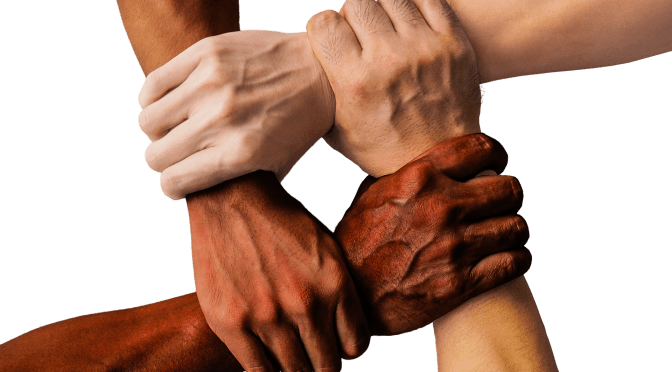
In this week’s reflections (available in audio and text), I look at how Acts 15 might help us overcome some of the barriers physical distancing is forcing us to face.

Barriers Overcome

Barriers.
Barriers can stop us from getting from one place to another.
Some barriers keep us safe.
Some barriers get in our way.

Barriers can separate.
Barriers can block and divide.

Some of us will have begun to get used to barriers at supermarkets, guiding us in or around the store, with markings on the floor to constantly remind us to keep 2m apart. Barriers to keep us safe that also keep us physically apart.

In 2020 we’re dealing with barriers in way’s many of us have never seen before. Due to coronavirus we’re blocked from being able to physically gather together. Christians can’t go to worship or prayer in church buildings, we can’t meet for coffee or children’s, youth and families ministry. Communities can’t gather for coffee mornings. We are physically distanced from one another.

But we are not socially distant. Over the last few weeks I’ve said many a time in conversations that I don’t find the term social distancing helpful, that I think it would be more helpful to have called it physical distancing.  

Why? Because even while 2m or more apart,  I think we can still be social. We may be physically distanced, but that doesn’t stop us being the social beings we are, made in the image of God to live in relationship. While not the same as physical meeting, the barriers of physical distancing can to some extent be overcome.

We can still have a conversation with the stranger who is walking on the other side of the road. We can still thank our posties and delivery drivers. From this week can sit in our gardens or in the park with a friend (still 2m apart of course).

In every phone call, every physically distanced catch up, every WhatsApp message, every video call, we have been gathering. Sharing fellowship. Seeking to encourage one another and build each other up.

I’ve been so deeply encouraged by just how ready so many in the churches I have been called to serve have been to phone, write, email, text and more to continue in fellowship together, encouraging and building each other up. And beyond that, reaching out to neighbours and friends, offering to pray for them, encouraging them, caring from them. This is mission, this is outreach, this is overcoming the barriers of coronavirus and building relationships.

For the moment we no longer have doors to open, so we are forced to use all that we have left, and we open lives, arms (metaphorically!) and hearts to others. And I wonder if in doing so we discover that it is in open hearted relationships in the streets in which we live, that we see the missio dei – mission of God – at work.

In Acts 15, at the council at Jerusalem Peter has his own barriers to deal with. Gentile believers were being told that unless they were circumcised there were not saved (15:1). The insider-outside separation that 21st Century human society seems so addicted to creating is no new phenomenon. Gentiles were not Jews, Gentiles were not circumcised. Gentiles were not the same as ‘us’ – so how can they be saved?

What does Peter say?  

‘My brothers, you know that in the early days God made a choice among you, that I should be the one through whom the Gentiles would hear the message of the good news and become believers. And God, who knows the human heart, testified to them by giving them the Holy Spirit, just as he did to us; and in cleansing their hearts by faith he has made no distinction between them and us. 10 Now therefore why are you putting God to the test by placing on the neck of the disciples a yoke that neither our ancestors nor we have been able to bear? 11 On the contrary, we believe that we will be saved through the grace of the Lord Jesus, just as they will.’

Acts 15:7b-11, NRSV

Cast our minds back to Acts 10, and we remember that Peter has already had is time to learn that God is bigger than the barriers of human society:

‘What God has made clean, you must not call profane.’

Acts 10:15b, NRSV

Peter had already been learning that God does not look for our outward actions, but at our heart. And that brings us in equality with our fellow human beings, not barriers between us.

Peter says:

“we believe that we will be saved through the grace of the Lord Jesus, just as they will.”

Acts 15:11

So what may God be saying to us today through Acts 15? That’s for each of us to ponder for ourselves. For me, I think God is reminding me that I’m saved not by my actions but by God’s grace.

That I can let go of some of what I thought was most important. That for a time at least, my calling to this vocation will look very different. And while that feels to me very different, unfamiliar and uncertain, it’s going to be ok. God knows my heart finds the barriers of physical distancing tough. God knows that some days are harder than others. And despite it all, God’s grace is always overflowing, and God’s love always unconditional, he knows my heart. With God, barriers are overcome.

God knows your heart too. However you feel today, wherever you read this, whoever you are. God knows how you feel, your struggles, your anxieties, your joys. And God is seeing you right now, with a heart that is overflowing with love and grace for you.

With God, barriers are overcome.


Join the conversation

if you’ve got thoughts or something to share you can comment below and share them with us all – I’d love to hear from you.

Downloadable Version

Sunday Reflections: Becoming Vulnerable

In this week’s reflections (available in audio and text), I think about a time I felt vulnerable and our own being faced with vulnerability as Covid-19 continues to present such a real threat to humanity.

NB – Dates of performance should be 2006 – Not sure how I got 2014 in my head when I recorded this!

Around this time of year 14 years ago, aged 14 I got gastroenteritis and stayed of school for a week. it was the first time in my life I’d missed school for so long, and it happened that it meant I missed the long awaited auditions for the School’s next show.

In November 2006, the school was to perform Joseph and the Amazing Technicolour Dreamcoat. Having not been in any previous shows, I was hoping I might get a part, and was disappointed I was too ill to audition. The next week, I went back to school and had settled that I’d miss out but to my surprise, despite missing auditions, the drama teachers allowed me to audition late, and by the end of the week I had not only got a part… I’d got the main part. I was going to play Joseph. My friends joked saying it was because I was the only year 10 who could still hit high notes.

We began rehearsals, had the summer holidays and then got back to it as term recommenced in September, and so did costume making. I’d not given costume any thought until suddenly I was presented with a gold belt and a white piece of fabric, about a foot deep and 4 feet long and told here’s your costume.

To this now just turned 15 year old, who had only just hit puberty, wasn’t the fittest, wasn’t the most attractive, and was a regular target for bullying – this was not just some costume. This was going to be brutal. I was being asked to stand on stage in front of my classmates (and those at the time I definitely wouldn’t call mates), in the equivalent of a white mini-skirt with a golden belt, and nothing else on.

Alas, I didn’t get as much bullying as I’d expected I might, but stepping out on stage the first time I felt incredibly vulnerable, conscious I was stood wearing, what felt like almost nothing, in front of my peers and teachers, and aware that I would have 6 performances to go,  including performing in front of Sir Tim Rice when he came to open the school’s new music block that month.

As performance week loomed I then discovered not only did I need to come to terms with such a scantily clad costume, I also needed to be caked in makeup from head to waist. Each evening as we prepared for the show, some of my friends had the honourable responsibility of helping me ‘orange-up’ ready for performances.

Vulnerability was somewhat thrust upon me. Part of it was rational, perhaps part not. Some of it was through the behaviour of others, some was through my own fear. Some was simply part of being human. Some was my struggle with my own self-image.

My biggest regret of that time is that I don’t have a recording of the show. I never had a chance to watch myself back, and years later would love to be able to watch and remind myself of what I achieved as I embraced the vulnerability required of my 14 and 15yr old self.

In Acts 9, for Saul as he travels on the road, free and powerful, on a mission to ‘take down’ the followers of The Way, he is blinded and can go on no longer without the help of others. Suddenly, Saul’s life changes as he has to suddenly come to terms with his new found vulnerability.

I know from many conversations that in the last 2 months, in different and varied ways, many of us have needed to come to terms with our vulnerability. Whether or not our age or health increases our vulnerability, all humanity is vulnerable right now. We have all had to face that vulnerability, changing the way we live, asking others to help us, to care for ourselves and our communities.

This is not easy. Much like Saul, we live in relative freedom, used to being able to do and go where we want when. Ongoing suffering, grief and struggle is part of the vulnerable reality this pandemic forces humanity as a whole to hold and bear.

But to become vulnerable does not mean all is lost. In the midst of our vulnerability, it can be hard to see how we can get out, but just as I look back and reflect on what I achieved, as we read on in Acts we’ll discover how much Saul achieves through his own vulnerability. I pray now that we, as individuals, communities and humanity, will allow ourselves to become vulnerable, and make space for God’s power and grace to transform us and all the world.


Join the conversation

if you’ve got thoughts or something to share you can comment below and share them with us all – I’d love to hear from you.


Downloadable Version


The photographic evidence!

Joseph and the Amazing Technicolour Dreamcoat, performed November 2006 at Brannel School, Cornwall