Tag Archives: Christianity

In The Potting Yard

Attending 3Generate 2025 with a group of 36 young people from Gatwick and Mole Valley Circuit, our campsite sat underneath a sign declaring ‘The Potting Yard‘.

As I spent a weekend as part of a team who cared for and nurtured these young people, I found God spoking to me, encouraging me and challenging me through the image of being in ‘The Potting Yard’. This inspired be to write the following reflection.


As you therefore have received Christ Jesus the Lord, continue to live your lives in him, rooted and built up in him and established in the faith, just as you were taught, abounding in thanksgiving.

Colossians 2:6-7


In The Potting Yard

In the potting yard,
are pots ready to be filled.
tools ready to be used.
compost ready to be potted.
seeds ready to be sown.

Seeds full of potential,
But need a gardener’s care and attention.
Seeds that need regular watering.
Seeds in need of a gardener who will watch them closely,
watching they don’t get too hot or too cold.
too wet, or too dry.

Seeds that begin to sprout,
But are hugely fragile.
Whose fresh shoots will whither and fade if neglected in these early moments of life.
Whose roots are small, unable to store up many resources for the long term.

The gardener must tend and care regularly.
Must know what their seeds and sprouts need,
To nurture them into growth.

In the potting yard,
are seedlings ready to be re-potted.

Seedlings that are green and full of promise,
Their stems are beginning to strengthen,
Leaves beginning to broaden,
Roots beginning to spread.

They need to new ground,
A larger pot,
Space, free of their fellow seedlings, to be free to grow further.

They’re still fragile.
Especially just after they’ve been re-potted.
Their fragile roots have been disturbed,
And the re-potting could be a moment they wither…
But with the right attentiveness from the gardener,
The new ground brings them new sustenance,
And they begin to flourish and grow.

As roots spread and stems strengthen,
The gardener can begin to step back…
Knowing they don’t need to water every single day.
That the door to the potting yard can be left open,
Pots can be put outside in the sun and left to begin to harden up,
To grow resilience for life in the big wide world,
It’s winds and rains,
The warmth of day and the cool of night.

The gardener doesn’t neglect them,
They are still attentive and caring,
But it is different.
Because the nurturing that been,
Has led to strengthening stems and widening roots,
The seedlings now have more of their own inner resources,
They have their own sources of self-care and sustenance.

In the potting yard,
I am.
Ready to be tended and cared for.
Ready to be nurtured.
To be carefully potted and planted.
To be tended by the all-embracing, loving arms of God the gardener.

To be nurtured by discovering the God given resources that are within.
Those I knew I had, those I didn’t know I had.
To weather the winds of the world,
The seasons of dry ground,
And learn to draw on that which is stored up within.

In some moments,
I feel dry and parched,
In others I look withered, and certainly don’t look of feel my best,
but the nurturing I’ve journey with has given me strength to weather these seasons.

In the potting yard,
You are.
Ever present
Never neglectful.
Tending and caring and pruning and watering and potting and turning and feeding.

And no matter how parched or withered I may think I am,
You always know the moment to quench that dry ground.
To offer sustenance when weary.
Shelter when buffeted by the winds of the world.

You never tire.
You never grow weary.
You are never neglectful.

God my gardener,
Nurture me,
Day by day,
Into the person you have made me to be,
Call me to be,
And know me to be.

Come Holy Spirit

Come Holy Spirit.

One of the shortest and simplest prayers in all history.
Yet a prayer with power and breath and depth beyond measure.
For in praying Come Holy Spirit,
We invite you, God, to come to us.

We know you’re already here.
Already with us.
But we forget, sometimes.
Sometimes we go about our lives, our discipleship, our worship,
Forgetting, that Spirit, you’re with us.

So we pray,
Come Holy Spirit.

We open ourselves to your already present presence.
Come Holy Spirit.

Come and encourage us.
Come and inspire us.
Come and heal us.
Come and strengthen us.
Come and empower us.
Come and hold us.

Come, Holy Spirit.


Originally written for an ecumenical Pentecost service in Effingham and Little Bookham, Surrey, 19th May 2024.

The prayer ‘Come Holy Spirit’ was inspired by the work of Rabanus Maurus, a 9th Century Frankish Monk, who wrote a song ‘Veni Creator Spiritus’, (Come, Creator Spirit). in the 13th Century it developed into a familair prayer across the Western Church, ‘Veni Sancte Spiritus’ (Come Holy Spirit).

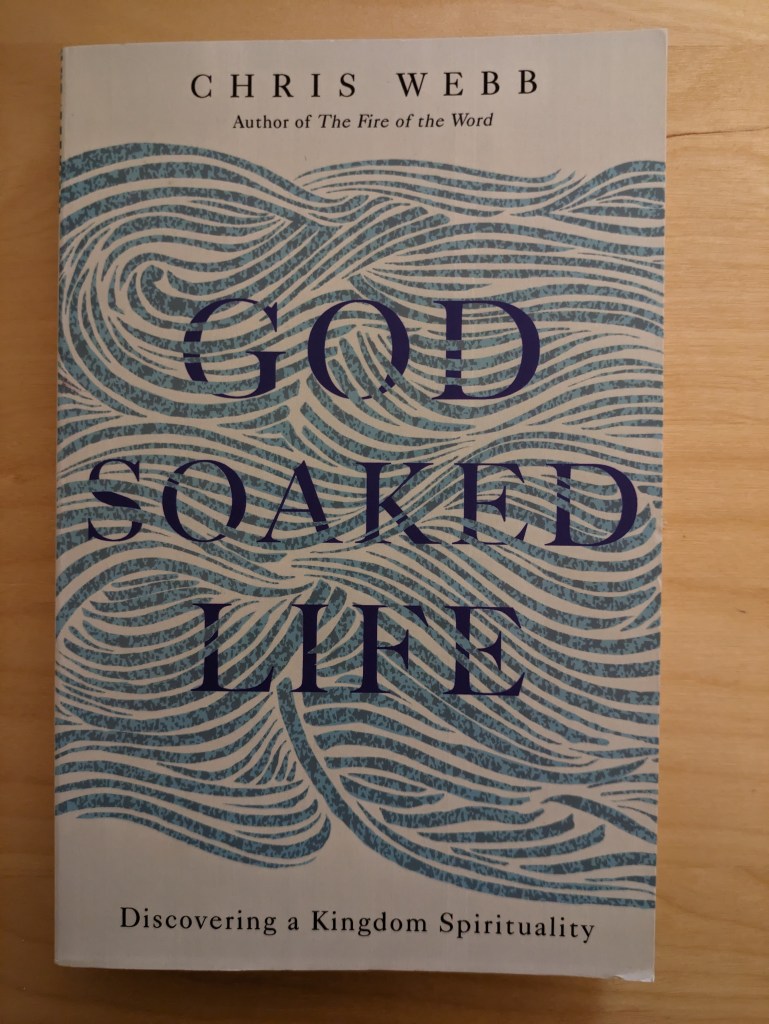
Recommended Read: God Soaked Life

If you’re looking for a book which helps you to encounter more of God – then this could just be what you’re looking for.

God Soaked Life, by Chris Webb, begins with an imaginative parable which paints a scene of life with God as living in a ‘unifying presence of the community of love’, setting the scene for the rest of the book.

Through the journey of the book, Webb highlights the invitational nature of scripture, where he suggests God is inviting us to live and love in community. We are all a work in progress, none of us are ever perfect, but regardless, we are valued in God’s Kingdom community. God’s love overflows for us, and God invites us to overflow in love for others – simple because we love as God loves.

Webb encourages us to embrace the vulnerability of honestly, in prayer, in community, in relationship with God, and accept God’s invitation to live a life soaked in God, day, by day, day. And as we do, we discover just how deeply God is already in all things.

I found reading God Soaked Life by Chris Webb an easy, yet riveting and enlightening read, that reframed and deepened my own understanding of what it means to live in relationship with God. Living a life of God Soaked Love, God Soaked community, God Soaked Life.


God Soaked Life: Discovering a Kingdom Spirituality, by Chris Webb is published by Hodder Faith.

ISBN: 9781473665286


The below service from leatherhead Methodist Church includes me preaching with reference to this book, in particular the opening imaginative parable.

Praise the Lord! A Call to Worship

A Call to Worship based on Psalm 149.

PPT and PDF downloads also available below.


Praise the Lord!
Sing to our God a new song.
Sing praise as you gather as God’s people.

Faithful ones, rejoice in your Maker.
Praise with dancing,
Sing for joy!

Worship with tambourine and harp,
Exalt our God with all you have and are,
For God delights in us.

This is the glorious privilege
of being part of God’s family,
the company of the faithful.

Sing to God a new song.
Praise the Lord!


Compost for the vegetable patch

You are the salt of the earth; but if salt has lost its taste, how can its saltiness be restored? It is no longer good for anything, but is thrown out and trampled under foot.

Matthew 5:13

Developed from a sermon preached at Felpham Methodist Church, West Sussex, on 5th February for their Vision Sunday. The full audio recording of the sermon is available below.

Audio recording

Compost for the vegetable patch

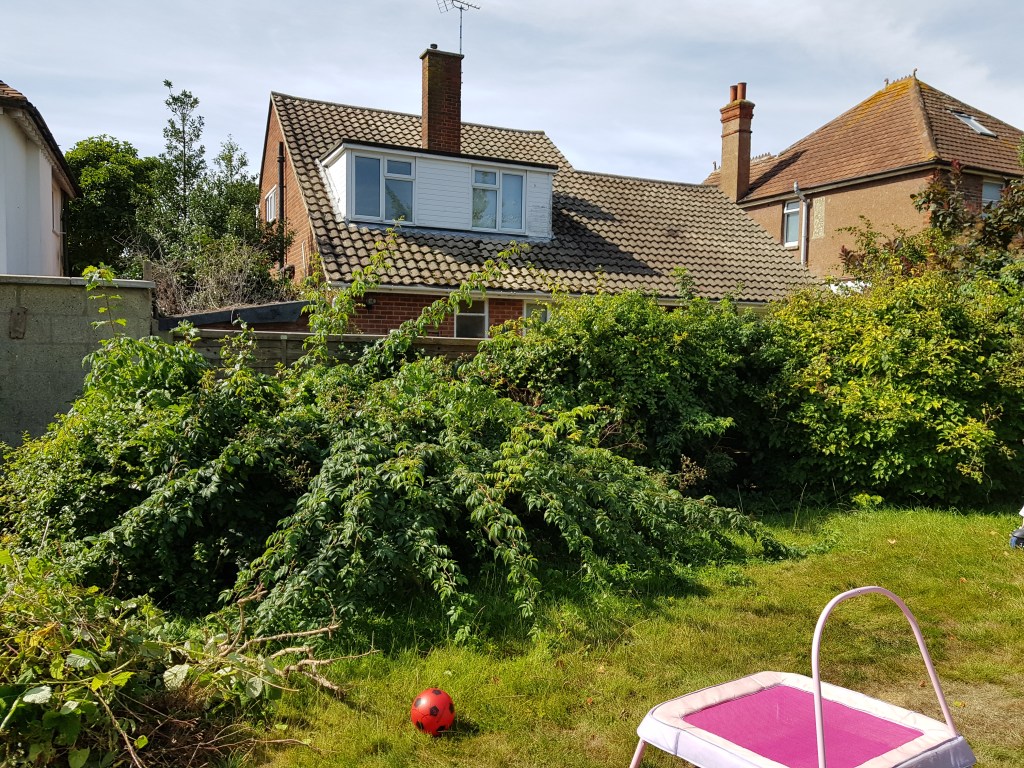
When we moved into our home, the garden was a mess. the bushes and weeds hadn’t been pruned regularly, and so it had all become rather overgrown. but one day, as we cut back some of the overgrown bushes, I was delighted to find a compost bin.

That compost bin now sits proudly on the corner of the vegetable patch, and in it we collect the grass cuttings, vegetable peelings and the occasional mouldy orange – and over time the worms do their thing and it all becomes compost, which has helped to boost the soil and grow great plants and crops on our veggie patch.

In the last weeks, all the autumn’s offerings have meant the compost bin has been overflowing, and I recently had to dig out some from out of the bottom to make space for more to be added.

Compost is great for the garden, but only when it is used. My compost will never serve its purpose if I leave it in the compost bin. it needs working into the soil to fulfil its purpose.

Jesus’ words ‘you are the salt of the earth’ in Matthew 5 are often understood as calling us, as salt, to flavour the earth, the world, will God’s goodness. But sometimes this can also lead to seeing the world as other than ‘us’, and something to not be directly engaged in, for fear of being tarnished by an unsalted world.

But, while the idea of being people who bring the flavour of God to the world can be a helpful metaphor – I find another interpretaiton equally helpful, if not more so.

Because in Jesus day, I don’t think they had table salt as we do today. So the word we read as ‘salt’ might have meant something slightly different to Jesus first hearers.

In the dead sea area of Palestine, minerals we now know as phosphate were plentiful, and used to fertilize the ground and were spread and dug into the land.

So when we read Jesus saying you are the salt of the earth, could Jesus actually have been saying you are the minerals of the soil? The compost for the vegetable patch?

In many ways I find that a comfort and encouragement. That might seem odd… why would I find encouragement in being told I am a mouldy orange or pile of potato peelings?

But for me, I find that an encouragement because it reminds me that despite my own self-doubt, my imperfections, my brokenness, my humanity, my own feelings that I can never live up to what God wants for me – God says you have great potential.

Even in the mess of my life,
there is goodness and fruitfulness to be discovered.

Jesus doesn’t want perfect human specimens, stored up in a salt cellar of equally human specimens, looking out on the world.

Jesus wants us to be real. Human.
Jesus wants us, calls us, loves us, warts and all…
And invites us to be salt of the earth,
the mineral for the soil,
potato skins, banana peels and grass cuttings – compost for the veggie patch, with great worth, purpose, potential and goodness.

So Jesus invites us to get out and live on the earth, dug into the soil of the world. Getting stuck in and living as people of God.

Is there room for conversation about inclusion?

This week, as part of a series of blog posts engaging with the Methodist Church in Great Britain’s Advent & Christmas theme ‘There Is Room’, I posted a blog titled ‘There is Room for All Ages and Genders’.

The brief blog reflected on my own experince leading a school assembly last week, and through the charcter of Mary reflected on God’s calling to all people regardless of societal expectations around age and gender.

I confess to it being the blog post in the series that I was most anxious about – because there is so much debate and vitrol around gender in particular at the moment, in society and especially on social media. But I having been moved and challenged by my own experience during the assembly, this was a reflection I wanted to share.

As always, the post also linked to Twitter, and I’ve been surprised by some of the response… challenging my use of language in the blog, suggesting it was the most exclusive depiction of inclusion and blasphemy. Others challenged that to talk about age and gender was not inclusive because and lacked narrative about abuse, appearance and beauty.

I’m not perfect, no one is, and when it comes to the use of language, we are all at the mercy of writing something that means one thing to us but gets interpreted in different ways by others. We write from our perspectives, our experiences, our limited learning and understanding.

And I know as a white, heterosexual man I write from a place of privilege and power. I’m always conscious of that, and as a result, I know there are times in my past where I have dissuaded myself from engaging in this area. Knowing others have more experience, more knowledge, more right to speak into the debate.

But recently I’ve found myself feeling challenged afresh by God that in being relatively silent, I serve to enable the powerful, not empower the powerless. That I will facilitate the marginaliser, not stand alongside the marginalised. In not being explicit in speaking up – I abuse the place in which God has placed me.

Maybe I shouldn’t have been surprised at all that posting about inclusion of age and gender led to a backlash. But I think the idea that one short blog, from one voice, reflecting on my experience of one tiny part of scriptures story, should tackle every nook and cranny of inclusion, seems ridiculous.

Twitter isn’t always a healthy space – cramming what we want to say into 280 characters often drowns out the possibility of nuance and at times, friendliness.

Jesus was not afraid to challenge, but the gospel I read also shows Jesus’s character was one of compassion and grace. He taught his disciples, sometimes he rebuked them, but he also educated them.

This experience of choosing to speak out, while knowing I have less personal right to speak on it that others, leads me to ask – Is there room? Is there room for conversation? Is there room to help one another learn? Is there room to share together constructively, with compassion and grace, rather than shoot one another down?

I leave you witha short quote from John Wesley, which has guided me through many moments of diverse opinion in my early years of ministry.

“Be of one heart, though we are not of one opinion…
love each other, despite holding differing opinions.”

John Wesley, 44 Sermons

Recommended Read: Unapologetic

Unapologetic: Why, despite everything, Christianity can still make surprising emotional sense.
Written by Francis Spufford.

Published by Faber & Faber, 2012

I have loved reading this fresh and bold story and exposition of why belief in God matters and makes a difference. Loved it, but struggled to work out how to share it with you – because it is not a book that is easily reviewed – it simply needs to be read and experienced for yourselves.

I’ll be honest – it is a challenging read – not that the words are hard to read – in fact quite the opposite, you may well struggle to put it down. But it is challenging because every page has at least one line, idea, or phrase that will make you stop and need to think about – possibly even want to disagree with – and then find your mind blown and read on to the next bit that makes you stop and think.

Spufford offers a unique presentation on how to make sense of God, faith, Jesus, bible and church for today – challenging any reader to look in a mirror, recognise our brokenness and need for mending and to find that mending in the grace of Jesus.

Unapologetic will make you think deeply and differently about life and relationships and faith. It asks questions about the existence of God, how we understand sin, why there is suffering in the world and how on earth Jesus dying is what brought redemption to the world. And to those questions there are few definitive answers offered, but there is a whole lot of Jesus , and a whole lot of hope offered in the questions, the mystery and the uncertainty that emerges. Oh, and a whole lot of unconditional, unwavering grace.

Church, Spufford argues, is a space of failed people seeking to perpetuate the unlimited generosity of God. it is a messy place, where the institution messes up (actually, Spuffords language is more colourful than that!), but Christ is still looking at and God is still shining.

Spufford concludes (and this gives you a flavoyr of all the book explores):

“If that is, there is a God. There may well not be, don’t know whether here is. And neither do you, and neither does Richard bloody Dawkins, and neither does anyone. What I do know is that, when I am lucky, when I have managed to pay attention, when for once I have hushed my noise for a little while, it can feel as if there is one. And so it makes emotional sense to proceed as if He’s there; to dare the conditional. And not timid death-fearing emotional sense, or cowering craven master-seeking sense, or censorious holier-than-thou sense, either. Hopeful sense. Realistic sense. Battered-about-but-still-trying sense. The sense recommended by our awkward sky fairy, who says: don’t be careful. Don’t be surprised by any human cruelty. But don’t be afraid. Far more can be mended that you know.”